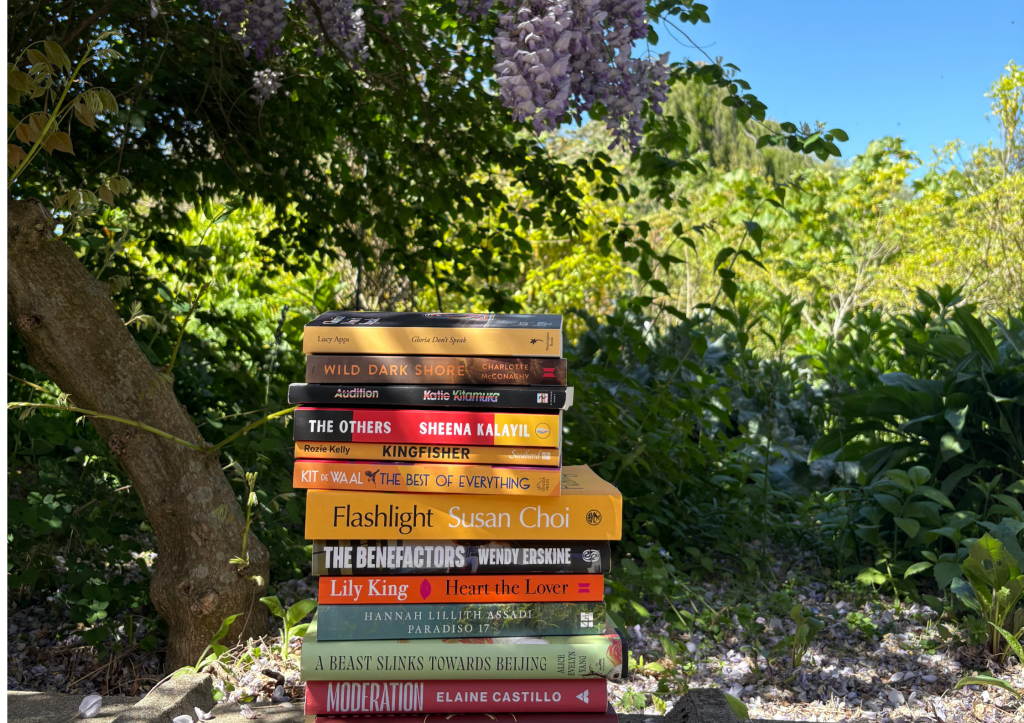
Women’s Prize for Fiction 2026
This was a more hopeful longlist than 2025’s. It goes to the darkest corners of human experience and capability, especially in the likes of A Beast Slinks Towards Beijing and Flashlight, and explores generational trauma as always, but it also left me with a sense of our strength as a race in the face of adversity. One of my favourite tropes is that of the possibility of the other lives we could be living; the ones we can choose for ourselves through our decisions, and the ones we are given due to context, and this was heavily explored this year. So too were stories of young love and passion, something so hard to do well and without cliché.
I’m glad I made it through ahead of the winner’s announcement on the 11th June, as I’ve had a lot going on personally this year. And I’d say I had a great time with the majority. So, be warned that there are major spoilers ahead—and enjoy!
Moderation, Elaine Castillo
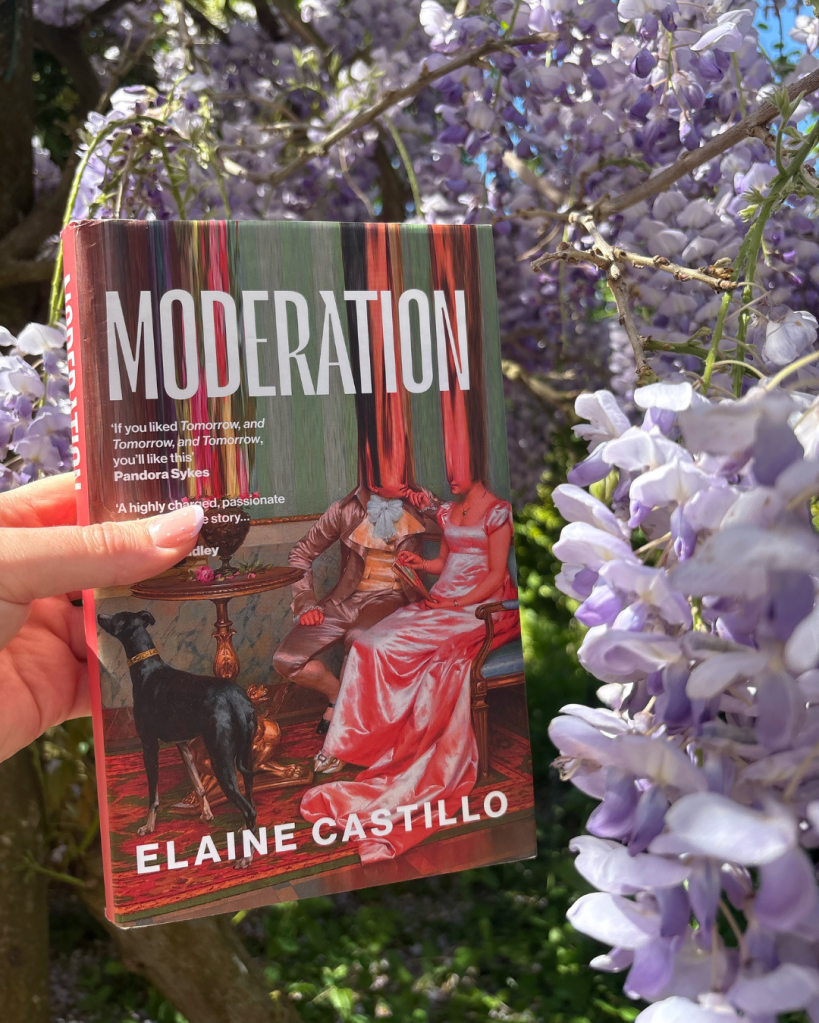
I think the way the blurb sold this book to me was misleading. Moderation is a novel about two lost souls finding each other, about Girlie’s inner world and repressive tendencies, about her personal journey, so much more than it was about the promised futurism or tech. The concept of content moderation and VR is super interesting but underdeveloped here, and it would have been better if the relationship was always meant to be at the centre. The fact is that falls short of being dystopian not, it seems, from intent, but from nerve and there being too many plot threads. That being said, it also took me a while to like either of the two romantic leads, Girlie or William. Girlie’s cynicism and emotional walls annoyed me, I didn’t really understand William’s appeal, and their combativeness towards each other was like watching two people pretending to be aloof as they flirt in front of you.
That being said, I grew to love how in control of her own life Girlie was, her grit, how far away she is from the standard messy-girl-seeks-answers trope. The writing was also rich, dark, imaginative, evocative, at its best when exploring the underworld of virtual reality and the darkness of human tendency. It also did well in conveying the growing unspoken desire and tension between them, Girlie’s awakening sexuality, making her more human, more likeable. I read that the author is a big dog fan and while somewhat extraneous to the plot, the novel’s inclusion of William’s dog, Mona, is something I enjoyed a lot. The ability to convey the uncomplicated, reciprocal, almost blinding love of human and dog is something underdone, or rarely done well in literature. Shoutout to the book cover too. Regency clothing? Saturation? Expressionism? A whippet (?) Sold. 3.5/5
Gloria Don’t Speak, Lucy Apps
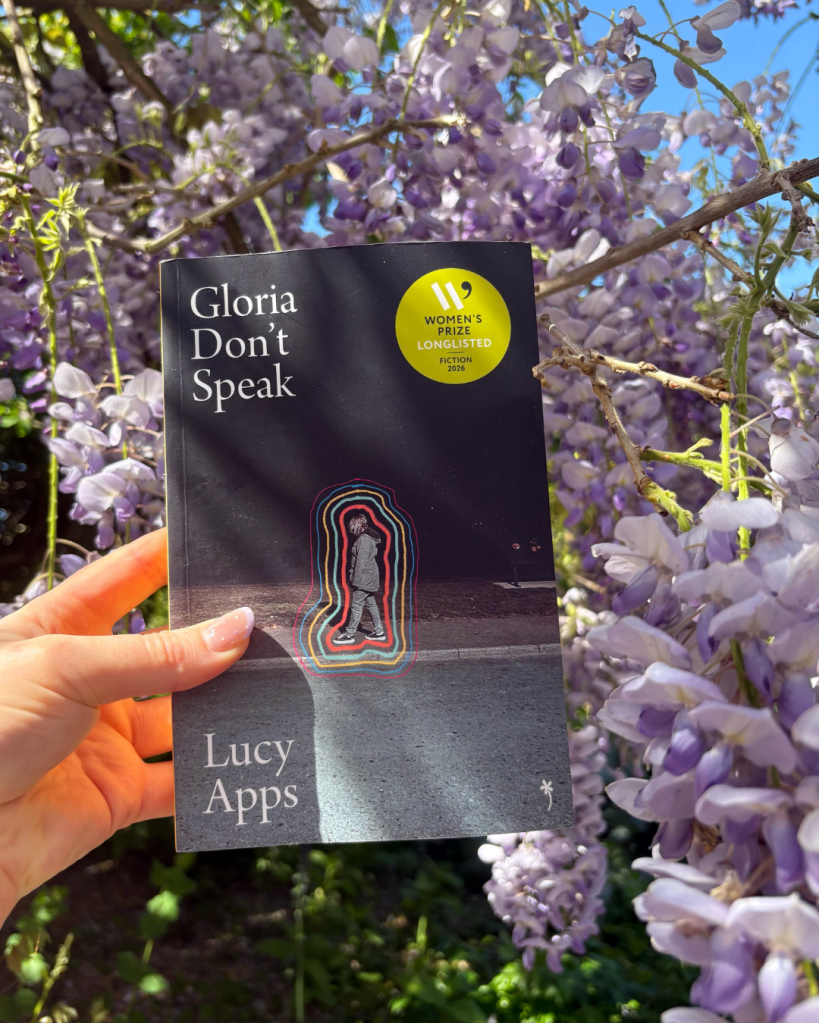
Our protagonist Gloria is a predominately non-verbal 19-year-old with a learning disability. Hers is a perspective I’d never read from before, which Apps handles deftly and expertly.
This is a book of two halves. When we meet Gloria, she has formed an attachment to a neurotypical man named Jack. We are given information about him only in as much as Gloria infers, but what we do see we get a bad feeling about. He is possessive, unpredictable, erratic, prone to angry outbursts and we are constantly worried about his potential to cross the line into abuse. At the same time, we understand that Gloria senses this but doesn’t understand it, but that she’s drawn to him anyway. This is uncomfortable to read and the book looks at the ways in which neurodivergent people like Gloria can be taken advantage of head on.
This half climaxes in the very real act of violence Jack does commit to a stranger, which lands him in prison and which upends Gloria’s fragile understanding of the world. The second half of Gloria Don’t Speak is where we see the repercussions of this. Although we don’t meet Jack again, his unstable presence haunts Gloria’s thoughts and actions through the years. She gains some independence when she moves out of her mother’s house and into a supported living accommodation, but when she hears that he is out of prison she starts to crumble. In her mind, her past is now her present, the trauma on a loop, and its effects devastating. Because trauma can happen to anyone, and for someone who already struggles to communicate, how can this be processed? Add to this the fact that she is a disabled woman, liable to be treated in the same way as any woman in our world nonetheless. Her routine, her structure starts to break down and she can no longer make sense of the world, which just isn’t built for people like Gloria. Apps captures Gloria’s echolalia and sensory overload by repeating and merging words together, speaking in presents and mixing up timelines. I struggled with the rhythm of this at first, which is very much an intentional move on the part of the author, because as she juxtaposes the perspective of the outside world, we are able to see both from inside Gloria’s head, and from the outside looking in. It allows us to understand the loneliness of trying and failing to understand, but feeling it anyway.
Unfortunately, the second half is where it began to falter for me. Despite the craft of the writing, I felt like there was little trajectory for her and I felt hopeless about the state of care, the plight of women and I think perhaps there was too little of Gloria outside of her disability. Perhaps though, as I normally like to relate to a character, I found not being able to understand her reactions and thoughts a little frustrating. This is a shortfall of me as a reader rather than the book itself though, which is sensitively crafted and refreshing. I also feel like it reflected loneliness and the need for human interaction beautifully, for there is much kindness around Gloria as well as abuse. In other words: I didn’t enjoy reading it, but I appreciated its craft and shining a much needed light on the ways others navigate a world not centred around the way their mind works. Something we should all read more of perhaps. 3/5
The Benefactors, Wendy Erskine
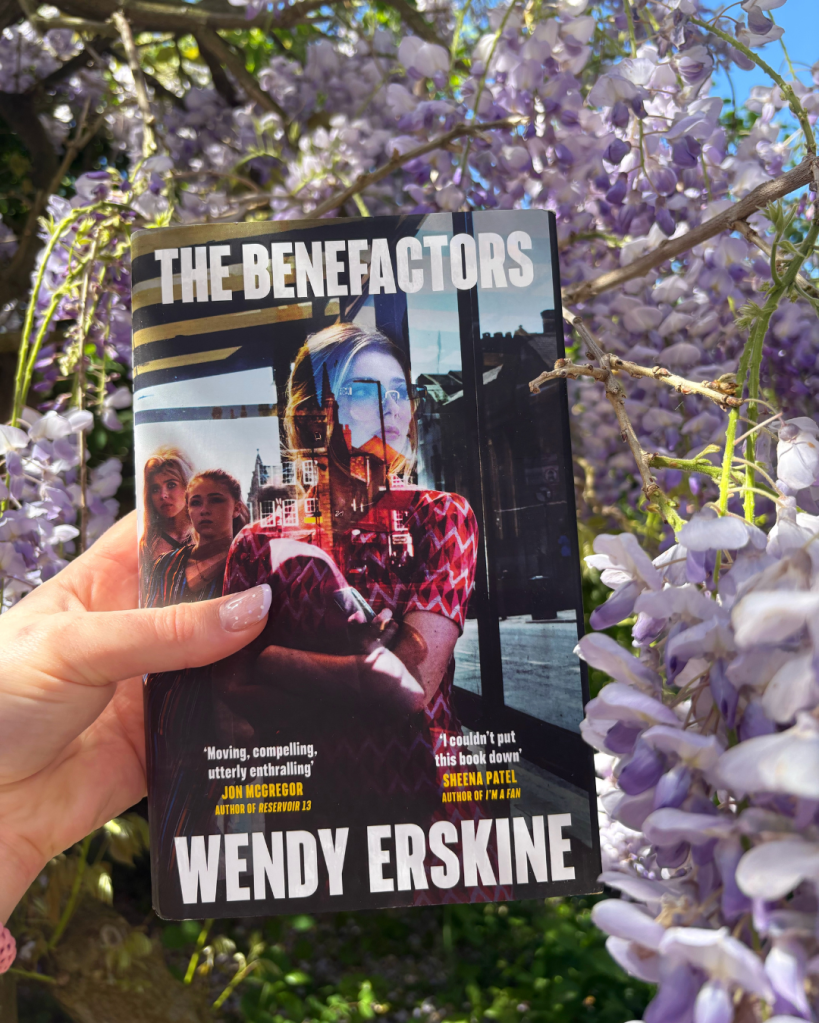
The Benefactors is a story about sexual violence, privilege and justice in the context of Belfast society. The central thread follows the working class Misty in the moments before, during and after her sexual assault by three comparatively much wealthier, much more powerful teenage boys. Delicately handled with both humour and depth, for both Misty and her family and the morally grey areas surrounding the boys’ families. It asks: how can Misty and her unconventional family hope to fight the largeness of these boys, all who have their own backstories, their own reasons. Especially if she was dressed like she “wanted it”, was “into” one of them, drank too much.
Even if I love the premise and am always willing to hear this story, I have to admit that it took me a while to get into The Benefactors and by the end, I still didn’t feel fully rewarded or satisfied. Perhaps it was because I listened to the audiobook, rendering one of the core elements – the multi-narrator format – difficult to follow. That the narrator sometimes even changes mid-paragraph seemed like overkill. Some characters too just don’t seem to add any purpose other than to bring to life elements of the author’s imagination.
But I did appreciate the idea: the whole as a portrait of the various, multi-generational, multi-faceted people of Belfast society, adding to context and place and culture. The best of these vignettes are funny, deadpan, charming, especially those around the relationship between Misty and her taxi-driver softie father, Boogie. But it felt like it failed to pull all the voices together and that ultimately, there were just too many. Aside from my inherent belief in seeing men held accountable, I felt too distanced to feel strongly about almost any of the characters. 3/5
Paradiso 17, Hannah Lillith Assadi
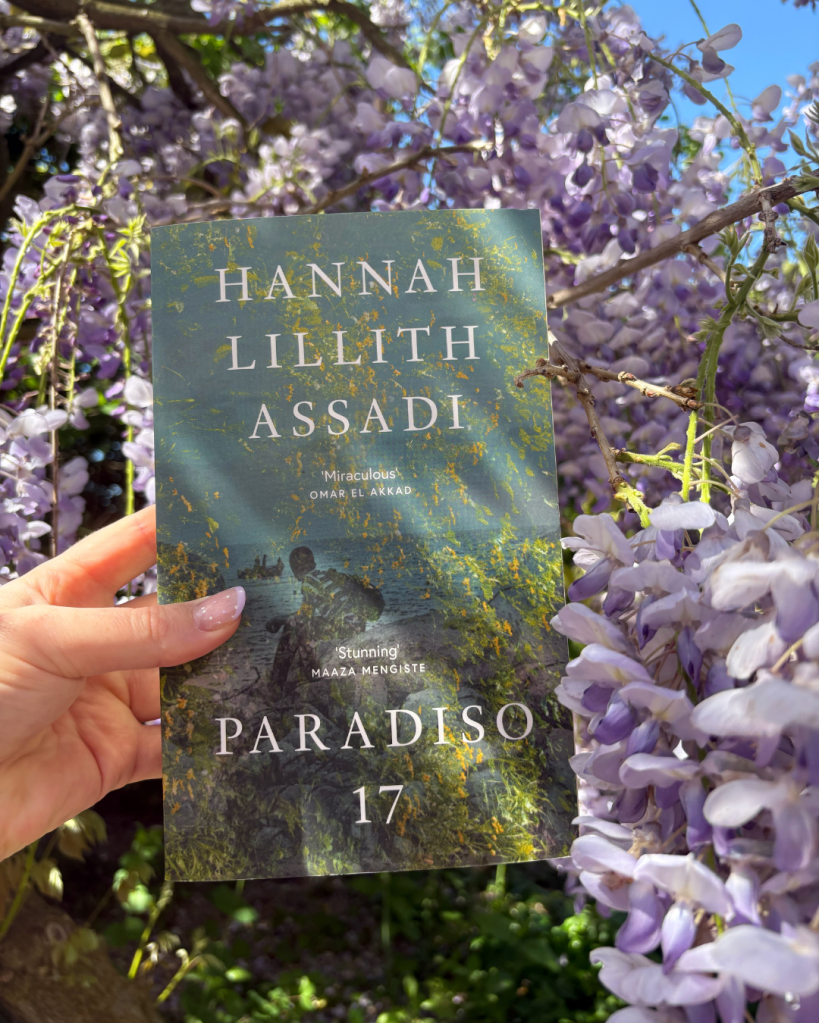
Paradiso 17 is a story of a life lived through the lens of displacement. A life that is marked but fully human and beautiful.
We meet our protagonist Sufien on his deathbed, as time becomes non-linear and moveable for him. This a moment told so lyrically and hauntingly, that I knew the writing was going to blow me away. We then move back to 1948, meeting Sufien at aged 5 on the day he and has family are forcefully exiled from Palestine during the Nakba.
The story thereafter is about a man who moves from country to country, identity to identity in the essential search to regain his sense of belonging and for an ancestral land he’ll never see again. He’s always on the move towards something, although it’s clear to the reader that he’s never entirely sure what and whatever it is always seems just out of reach. In Florence as a young man he meets people and makes memories, has experiences and sets in place poor habits that reverberate thereafter. In New York he struggles with poverty, bankruptcy and homelessness and ultimately meets his Jewish wife, who will stand by him for the rest of his life. In his life’s final chapter, he finds some sense of belonging in his daughter and the Arizonian desert and struggles with the long and ugly realities of cancer.
He is the emotional personification of exile, continually looking to rectify what happened to him as a child. It is a novel full of sadness and loss but at the same time, the lyricism of the writing gives it hope and life within the emotional depth. Sufien as a character is dark and troubled and you’re exasperated by his bad choices with money and drinking, his infidelity, his self destructiveness, his interactions with women. The latter is the reason I’ll give Paradiso 17 four rather than five stars; set in the 80s and 90s, Sufien’s patriarchal view of women and sex is realistic but uncomfortable to read, and it often seems like the female side characters are two-dimensional plot devices rather than fully formed humans.
But Sufien is also funny, charming, provoked by beauty and ultimately fully developed and human. This is tribute to Assadi’s skill as a writer; she gives him grace and compassion at the same time as allowing him to be flawed and contradictory. The extra layer of humanity and hope to Sufien’s story are the characters in his life who stand by him and love him despite being fully aware of his flaws—his wife, Sarah, his best friend Bernardo, and ultimately, his daughter Layla—even if they can’t understand his perpetual search for home in its full context.
It’s not an overtly political novel, despite the background of Palestinian ethnic cleansing, but it still feels relevant. Paradiso 17 is about the ways a life that begins with displacement can still be ordinary, fully formed, imbued with grief and sadness as well as great love, friendship and joy. And that maybe all of that is home enough. Finding out that the novel is based on the story of Assadi’s father made this even more moving, for you see how much the memory of a person can reverberate after their life ends. It’s a tribute: a novel of love. 4/5
Flashlight, Susan Choi
-shortlisted-
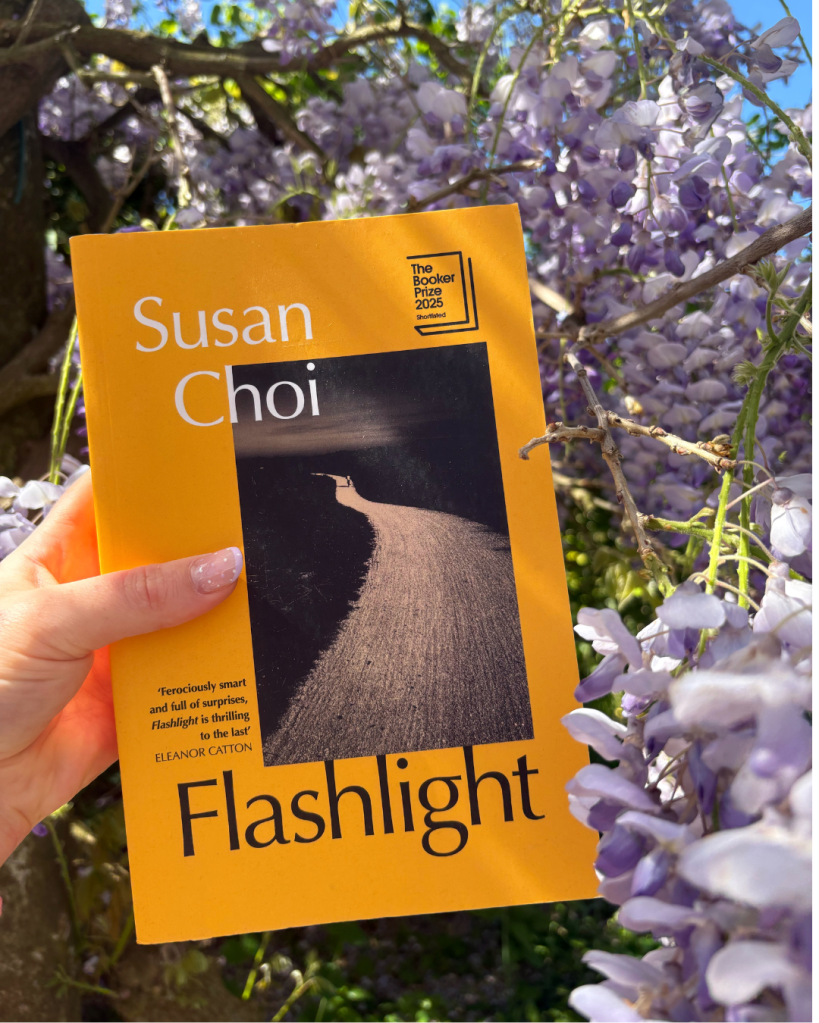
Flashlight is the story of the mass abductions of South Koreans by North Koreans, who were brought to the DPRK against their will from both South Korea and abroad during the Cold War era. But although populated by other characters affected by these abductions, this is the Kang family’s story: an investigation into how we are shaped by the things from our past that we don’t know.
The novel begins in the present with Louisa, the smart mouthed little girl sparring with a therapist about an event that serves as the centre of the novel; the disappearance and presumed drowning of her father, Seok or Serk, on a beach in Japan.
After this, we are swept along on a tale that adheres to neither chronology or perspective. Holding Seok’s disappearance at its heart, Flashlight follows the repercussions of this disappearance and its build up through time. Choi travels across decades and continents, using this one tiny family and its tragedy to examine the cultural movements, geopolitical play and devastating crimes of competing nations.
We go back to meet Seok as a child of Korean parents who immigrated to Japan, before moving onto his immigration to the States and marriage to an American woman and subsequent attempts to distance himself from his Korean heritage. The story of his life is interwoven with the characters involved in it. His wife Anne, who has MS; Anne’s illegitimate son, Tobias, who lives as a sort of hermit; the least likeable character, Louisa, who resents her mother for her illness and attempts to carve out her own strained identity across Japan, the US and Europe.
Choi also includes the stories of other characters affected by the abductions and other historical and societal events and this worked well. We feel the tragedy of how Seok’s family are tricked into returning to North Korea, promised a better life than the one they led in Japan. We hear the moving story of a young teenager kidnapped by the DPRK and the tireless search of her parents for her return. Not only do these characters and stories coalesce to move the Kang’s tale forward, but they also give you time away from the cast of main characters who are, quite honestly, all difficult to like. And to a greater or lesser extent, they are all facing the unimaginable too. This is Choi’s skill; writing complex, psychological realistic characters who are flawed, resentful, selfish, victimising, and yet who suffer too. They are, in other words, full human beings. One example of this I thought done particularly well was the complicated relationship between Anne and Louisa, mother and daughter, who have been at odds for Lousia’s whole life, but who are united by the tragedy of Seok’s disappearance and their own similarities.
“When Louisa hated her mother it was because the thought of her caused so much pain; when she hated her father it was because she was conscious of emulating his remoteness.”
The novel was, however, too long and somewhat uneven, with many of the plot points seeming to add little to move the story forward. The amount of time given to particular aspects could have used an edit. Moreover, Choi sometimes slips into the didactic; perhaps in becoming too involved with making her characters whole, not enough time is spent on showing us why we must feel and believe things, rather than telling us.
However, you get a sense that Choi has a clear plan. What at first seems like a family drama, driven by its characters, soon reveals itself to be much more sweeping. Many puzzle pieces from the beginning show up throughout and make things clear, and by the end we do have a well thought out image. I think its masterful to be so in control of your unique chronology, in which forces the reader to sit back and be swept along, as timelines split and come back together. I do like a circular metaphor too, and enjoyed the fact that by the end, like Seok, you too have been swept out adrift on the waves of time, story and history for 450 pages. 4/5
Dominion, Addie E. Citchens
-shortlisted-
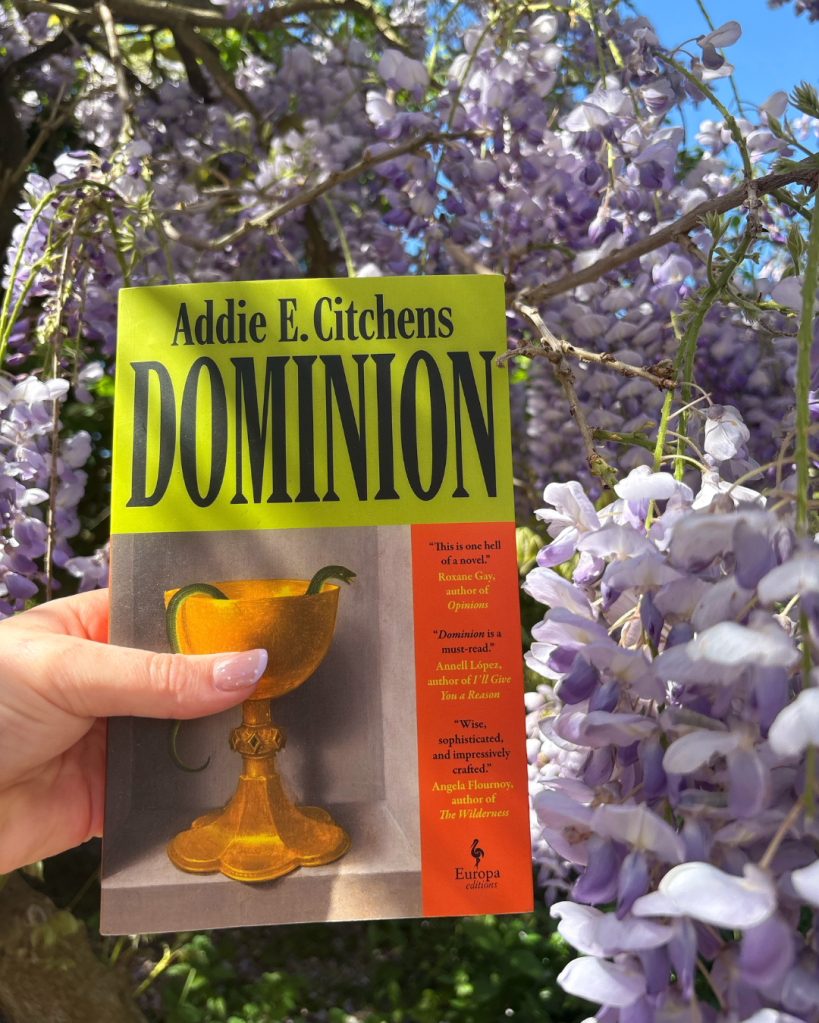
Dominion is set up as a story about the community of the Seven Seals Missionary Baptist Church, located in Dominion, Mississippi. At its centre is the wealthy black Winfrey family: the Reverend Sabre Winfrey Jr., his wife Priscilla, and their son Emanuel or Manny, the charismatic, athletic ‘Wonderboy’. It’s also about Diamond, an orphaned girl from a poor family who falls for Manny badly. But underneath this cast of characters and their secrets, it’s a story about Priscilla and Diamond and what it means to survive as a woman inside a pervasive patriarchy where men are free do as they please. In this society, the patriarchy distorts everything, especially relationships, where male needs are always at the forefront and sex and violence elicit shame and self-judgement in women.
The narrative voice switches primarily between Priscilla and Diamond, capturing their respective experiences and ages well. Priscilla is at first presented as the long-suffering wife who, fully aware of her husband’s discretions and cruelty, copes by devoting herself to her sons, and to drink. Diamond lives with her adoptive mother and we understand that she’s experienced a very different sort of life to Emmanual. Despite her dark past, she is hopelessly naive, delighting that Emmanuel picks her out at school like a prize lamb and who blindly believes in his purity through all of his wrongdoings.
The two women are pitted at first as being at heads, the classic mother-girlfriend trope where each wants something different for Emmanual and neither really knows him. It’s clear to the reader that they both see what they want to see: Priscilla, the upstanding young man she has devoted herself to raising and who mustn’t be led astray; Diamond, the boy who has chosen her. At the same time, we quickly become aware of the underlying threat and ugliness Manny holds within him, first through their eyes and then through direct references to acts of sexual assault and violence through the accounts of others. The realisation about Manny’s true nature comes first to Priscilla, who in turn sees that her and Diamond are really on the same side: escaping the system entrapping them both, even if the system is her son. This pain affected me a lot; that of a mother who has tried her best but has been unable to stop her son turning into a monster, the ‘devil incarnate’ and who perhaps, by failing to hold him accountable, has contributed to this.
The message here isn’t subtle. Reverend Sabre Winfrey Jr. and his son are beloved publicly, while their private lives reveal profound hypocrisy. Fittingly, the Reverend is largely heard only through his typewritten sermons, which open each chapter and create a deliberate barrier between him and the reader. It’s fitting though that this is the only time we hear directly from the Reverend himself, but although a novel concept, these sermons left me a little cold and I often skim-read them, preferring to hear from the women themselves.
This is an angry book critiquing masculinity and its hypocrisies. And even without being familiar with ultra-conservative religious practices in the American South, it is a misogyny every woman will recognise.
Although violence pervades in this community, I think Dominion did well to avoid graphic descriptions of the sexual assaults and other violent acts peppered throughout. It is enough to focus on the psychological and emotional toll of this violence.
There isn’t a happy ending to Dominion as much as a somewhat hopeful one. It offers no easy solutions for dismantling the structures it condemns. If there is hope here, it lies in individual women and girls seizing control of their own lives. Watching Diamond do exactly that in the final moments is deeply moving, especially in its giving agency to a black woman navigating gender, racial, and class discrimination.
My only critique is that the men just didn’t seem to hold up as being capable of having such power over the supremely more interesting and layered women around them. But I did like the metaphor: though the men are the centre of the town, it is the women who are at the centre of the story. And by the end, both have become the centre of their own lives. 3.5/5
The Correspondent, Virginia Evans
-shortlisted-
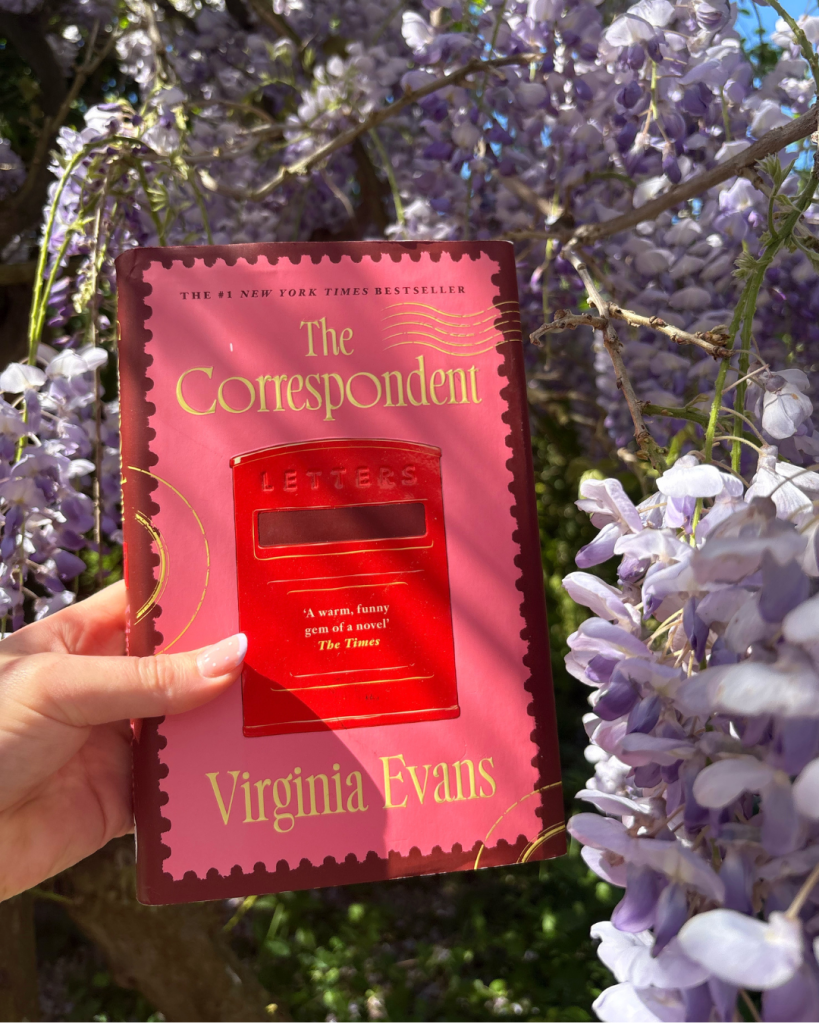
Upon starting I wasn’t sure if I’d enjoy The Correspondent, firstly because it is written entirely in epistolary form, and secondly because I’m not a fan of a cranky narrator.
73-year-old Sybil Van Antwerp is the heart of this novel. We find out about her, the people in her life and the decisions she has made through the letters she sends and the replies she receives. It is and always has been her way of making sense of the world. We read correspondence about topics as trivial as the dramas of her gardening club, to the mental health struggles of the young son of an old friend, to the farewell of her ex-husband who lies on his deathbed. No one is free from her opinions, and she gives both good and bad feedback to authors, journalists, family members, solicited or not. She’s acerbic, stuck in her ways, crotchety, but as I read on and her life expanded, I fell for her open-mindedness, her charm, her wit. Her insistence on maintaining this lost form of correspondence was also very moving; I used to write to my granny as a teenage, and I can’t imagine the insight into this period of my life I’d get if I ever reread our letters.
I found the moments of misunderstanding around the digital age and its the norms particularly touching. When at first she writes to an agent at a DNA company, attempting to form a personal relationship whereby he can reassure her about the process, we cringe, waiting for the rebuttal or humiliation of a standardised response. What we receive in the end is a charming correspondence between the two; his kindness in keeping up his emails with her, and in turn her ability to help him in the future. Fun too were her moments of communication with real authors such as Joan Didion, and a perfect way for us to understand the depth of her grief and her attempts to intellectualise it.
It’s very obvious that Sybil’s letters are her therapy, her way of speaking about things that she would otherwise avoid talking about in real life. We understand she is reclusive and cold, but as we read further she begins to open up to the other people in her life who show her kindness, and to forgive herself for a tragedy that happened in her earlier life.
Her letters show her to be anything but perfect, and perhaps the redemption arc she receives at the end is a little idealistic. But I don’t see anything wrong with trying to give someone a sense of purpose and surprise in their latter years.
Artfully written, meticulously formed, The Correspondent is another one of my favourite genres: the exploration of a life that might not be extraordinary, but is entirely human in its ordinariness.
I’ll end on a line I loved, one from Sybil to her daughter with whom she has a strained relationship:
“I’m sorry I didn’t do better. I know you think of me as your mother only, but please inside, I am just a girl.”
4/5
The Mercy Step, Marcia Hutchinson
-shortlisted-
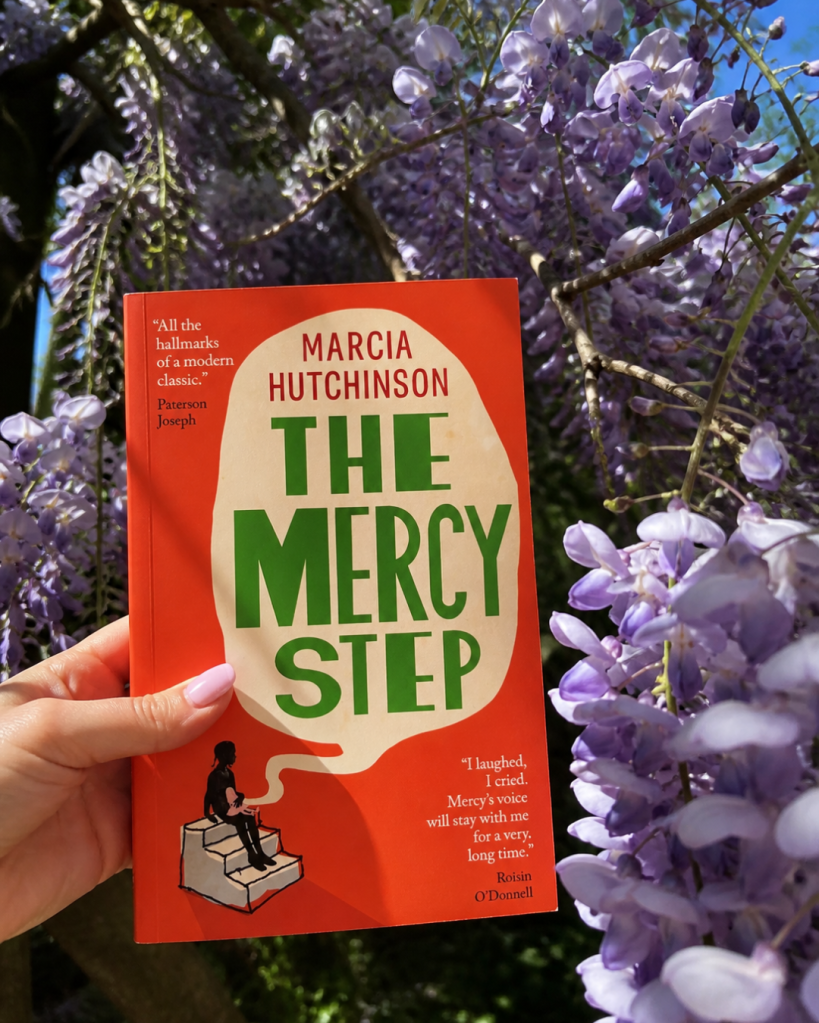
At the beginning of The Mercy Step, we meet our protagonist as she prepares to leave her mother’s womb. Mercy’s angry, charismatic, poetic description of leaving the safety and confinement of this space sets up the character we get to know, dramatic and strong-willed from the start. Set in Bradford in the 1960s-70s, Mercy is born to chaotic and dysfunctional Jamaican parents of the Windrush Generation. She adores her mother, with whom she has a protective, almost motherly relationship, describing it as like a thread that gets thinner the longer she spends from her original place of safety.
We follow Mercy’s early years, from birth to age 12 years old, an unusual choice for an adult novel but one which holds in the ways in which we see her voice reflect her age and growth. Intelligent and insightful from the onset, you can’t help but root for her feistiness, her cheeky rebellion, her too-old-for-her-age witticisms. We watch as she struggles to find common ground with her family, her siblings who don’t understand her, her mother who doesn’t have time for her, and her abusive father, who she hates. Your heart aches for this little girl trying to make sense of the world around her. Because despite Mercy’ precociousness and maturity, she is still a child who struggles to make sense of adult choices, trying to navigate a world through a child’s perspective and body. When she understands that Mummy is being hurt by Daddy, it seems obvious to her that Mummy will hate Daddy and leave him. It doesn’t make sense to her that Mummy doesn’t do this. This is achingly sad and a clever way to demonstrate how children are damaged and influenced by the things they see but don’t understand while they are still impressionable.
Another way the coming-of-age trope works is to demonstrate the wider realities of growing up as a black girl in the north of England in the 60s and 70s and a range of other related societal issues. I wanted to scream as I saw her intelligent little mind trying to understand the insidiousness of the patriarchy; why her only brother, the ‘ounli bwoy picknee’, is favouritised and prioritised by both parents’ compared to Mercy and her sisters simply by virtue of being male. Add to that the child’s view of her father’s domestic violence, her mother’s religious psychosis, mental health struggles, grief, loss, class, sexual violence and life within the diaspora, Mercy’s introspective, tone feels both personal and universal. Although there’s a lot covered, Mercy’s innocence, her charm, stops the novel from being too traumatic or heavy. Particularly joyous is the way in which she finds belonging and a place for her vivid imagination to run wild in books, reminding me of the hours of I spent getting lost in stories in my own childhood.
Mercy carries the book; none of the other characters are in anyway likeable in my opinion, but this is clearly the point. She is all of us, expressing anger, passion and hope in face of a confusing world: a child trying to make sense of things that don’t. She represents both the joy and sorrow of human life. 4/5
The Others, Sheena Kalayil
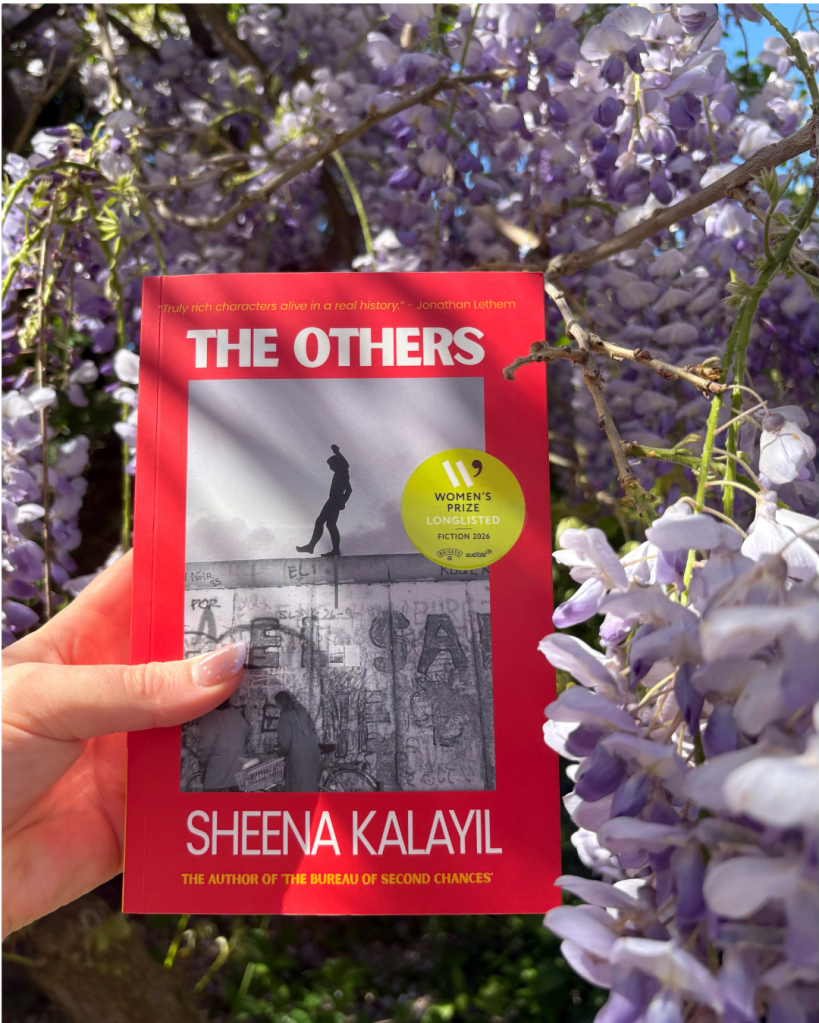
It’s when the subject matter of a book is the most serious that the genius of its humour stands out. This is by far the funniest book in the long and shortlist, which for a novel about ISIS brides is saying something. It’s also for this reason that it’s the most controversial, and why it may not win. The tone can be hard to reconcile for some people; for me, this is intentional and why it works.
Nadia is a heartbroken academic who gets scouted to work on a contentious UN project working to deradicalise and repatriate ISIS brides in Iraq. Putting her PhD into practice, she begins the process of navigating the often insane UN bureaucracy and the personalities working within it. In one of the camps, she bonds with Sara, a sharp and foul-mouthed East Londoner who joined ISIS at age 15. As someone who was almost radicalised at a young age herself, Nadia vows to get her home. As the novel progresses, we see how this process is as much, if not more for Nadia herself. Indeed, Sara struggles with the notion that she needs to be deradicalised at all.
Some of the funniest parts of Fundamentally are its depiction of the UN, which is constantly throwing around bribes, justifying its budgets and covering its tracks. This keeps the tone light, whilst also calling into question the ethics of the programme and all international aid efforts in general. Equally as funny are the host of characters working with Nadia, including a white hippy Sheikh who travels from California to ‘help rehabilitate’ the women. It is made clear that every person is there to fulfil their own white and brown saviour complexes in different ways.
Nadia is a wickedly witty narrator; she is brash and offensive, but’s she’s also wry and insightful, a true millennial who deeply cares for these women and especially Sara. Younis treads this line carefully, in a way that still cements the book’s central questions:
“I’d heard that ISIS considered white converts to be the most desirable brides. Imagine fleeing Europe for the land of Islam, and you’re still second fiddle to some white girl who’s lost control of her gap year.”
As someone only a little familiar with the UN and the politics around ISIS brides, Islam and terrorism, I appreciated the subtle ways in which Nadia’s perspective is shaped by both her mother’s strong religious views and her own Western values. We see her slowly trying to impose these values as the ‘right’ ones onto Sara, who doesn’t want or need them. The point is clear; the West needs to stop patronising people in majority Muslim countries with our own perspectives. However, I do understand that for someone with a deeper understanding of these topics, the themes are somewhat surface-level, or stereotypical.
Yet the book’s central premise—how can we save someone who doesn’t want to be saved?—is clear. It is about the politics of victimhood, belief, faith, love and family and how we navigate the world through our beliefs. To this end, Younis tread the line between dark humour and creating awareness of how radicalisation can’t be separated from the way that Islam has been stigmatised, very well. Writing a novel about ISIS brides has got to be tough, and I loved it. 5/5
Kingfisher, Rozie Kelly
-shortlisted-
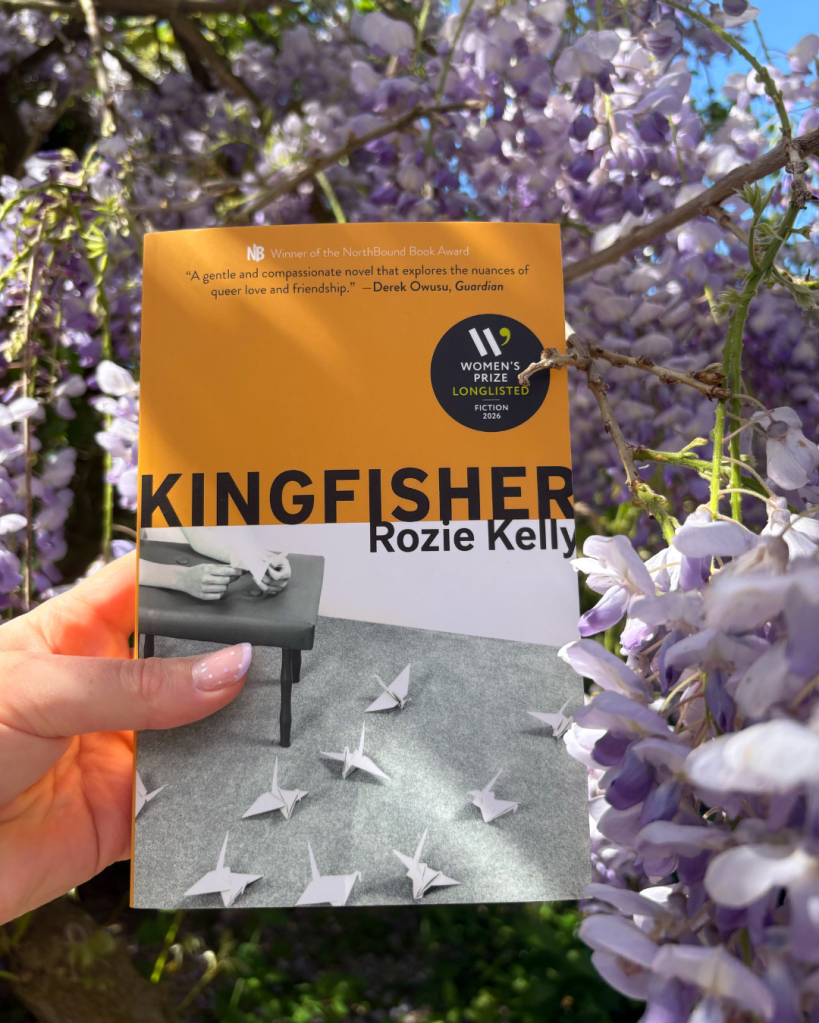
This novel crept up on me. Kingfisher is about a professor of creative writing at an unspecified British university who lives with his long-term polyamorous partner, Michael. At the onset, he becomes infatuated with an older female colleague, who he calls “the poet”, who he immediately decides he wants to “fuck”. The novel follows how his relationship with her grows, changing into something softer, more devotional, as well as the disintegration of his main relationship, his struggles with dishonesty and polyamory, alongside his difficult dynamic with his abusive dying mother.
It’s a slow burner but intense, capturing the essence of becoming obsessed with someone, of wanting them so much it’s painful. This was particularly interesting from the perspective of a man who has never been in love with a woman before. Simultaneously, it’s about the heartache of falling out of love with someone familiar, of still feeling desire for them, and ultimately about the fluidity of our selves and our relationships with others, of desire and sexuality, or friendship, of who we choose to spend our time with.
It’s written elegantly and poetically, even when in relation to cruelty and harshness. It is perceptive, sardonically funny, balancing the dark and light parts of the human experience in a way that is both soothing and intense. It’s passionate and sexy and at some points, very difficult to read in its realistic depiction of self-interest. I found our protagonist especially difficult to like. His identity changes depending on the person he is with in an almost ugly way and you feel the fluidity as weakness rather than empathy. We meet the other characters entirely in terms of his relationship to them, and so I found it difficult to understand why he becomes so infatuated with the poet (to me she was deeply uninteresting), why it was he found Michael difficult to let go of. We begin to understand this more in relation to his mother, who is cruel, homophobic and bigoted and was emotionally abusive as a child in a way that has clearly informed much of his identity crisis. Nonetheless, most of the relationships he has are frustratingly unsatisfying, and ultimately you don’t feel as if he has grown or moved away from his self-destructiveness at all by the end of the novel. But I think this is the point: there is a human messiness and a lack of pathos that the reader is forced to accept.
“Humans will always do something horrible if you watch them for long enough.”
This is a depressing way of looking at human nature perhaps, but it is cleverly done, subverting our expectation that things will be wrapped up neatly. There is a sense of inner lives not fully understood or articulated, with people acting and reacting, unable to express how they feel because they don’t understand them themselves. And isn’t this true of most of us? We don’t have resolved conclusions about who we are because as we change, so do our relationships with others. Identity is unstable. And so, even if an uncomfortable read with a slightly disappointing ending, it’s emotionally dense and painfully realistic, fully deserving of its place on this list. 3.5/5
Heart the Lover, Lily King
-shortlisted-
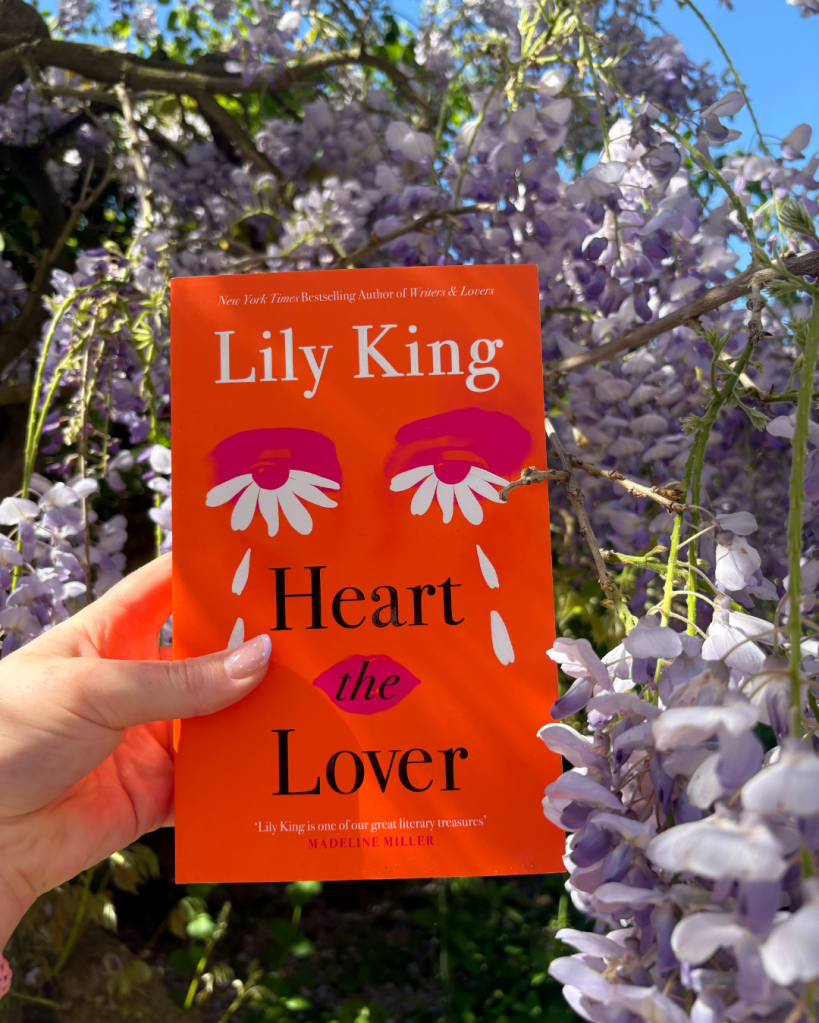
A beginning line like “You knew I’d write a book about you someday,” is one I can imagine myself having written. I wish I had.
With that, I knew my heart was in for a rough time. I haven’t read a book that made me experience that teenage anguish and longing for passionate, undying, unbearable love in its most painful, obsessive, romantic form in a LONG time. I felt mad with it, alongside the unnamed narrator. And only by the end do we truly ‘know’ who ‘you’ is.
Split into three sections following the life of our narrator, we meet her, Sam and Yash while they are at college. Quickly nicknamed “Jordan” after the feisty golf champion in The Great Gatsby, she’s easily drawn into their academic world of literary discussions, intellectual superiority, bravado and youthful idealism. I adored this part: academia in novels always makes me romanticise my own time at university. All of the options that were open, however vulnerable we all were, how little of life we knew and how much we thought we did.
Later, we meet her at two stages of her adult life, where she reflects back on those times and the decisions made, the paths followed, and how that has come to bear on her life as it is now. Writing more of the plot will reveal too many of its twists and turns, but I loved all of the characters, so vulnerable and relatable they were in their pain and indecision. The prose encapsulates both the burning heat of feeling of the past and present, and the melancholy of looking back.
This is a romance, but more: it’s a story about choices, about those we make when we’re young and how they can lay down a path for us that may have been leading elsewhere. How falling in love can derail everything, how ambition leads, and about what we should prioritise when making our choices. All of this alongside the very human feelings of regret, rejection, grief, loss, forgiveness and how they can set us on different courses along the way.
I adore a story about alternate possibilities of how a life could have been lived, and this is full of them. And although this is a book about love, it’s very grounded. It’s about how life’s twists and turns can bring us up and then break us, only to let us resurface. Again and again. And that’s what the book does to the reader. By the end, you’re supposed to feel unmoored, in a space of longing, of ambiguity. Of lost futures and versions of the characters (and selves) that were tied to them. 5/5
Audition, Katie Kitamura
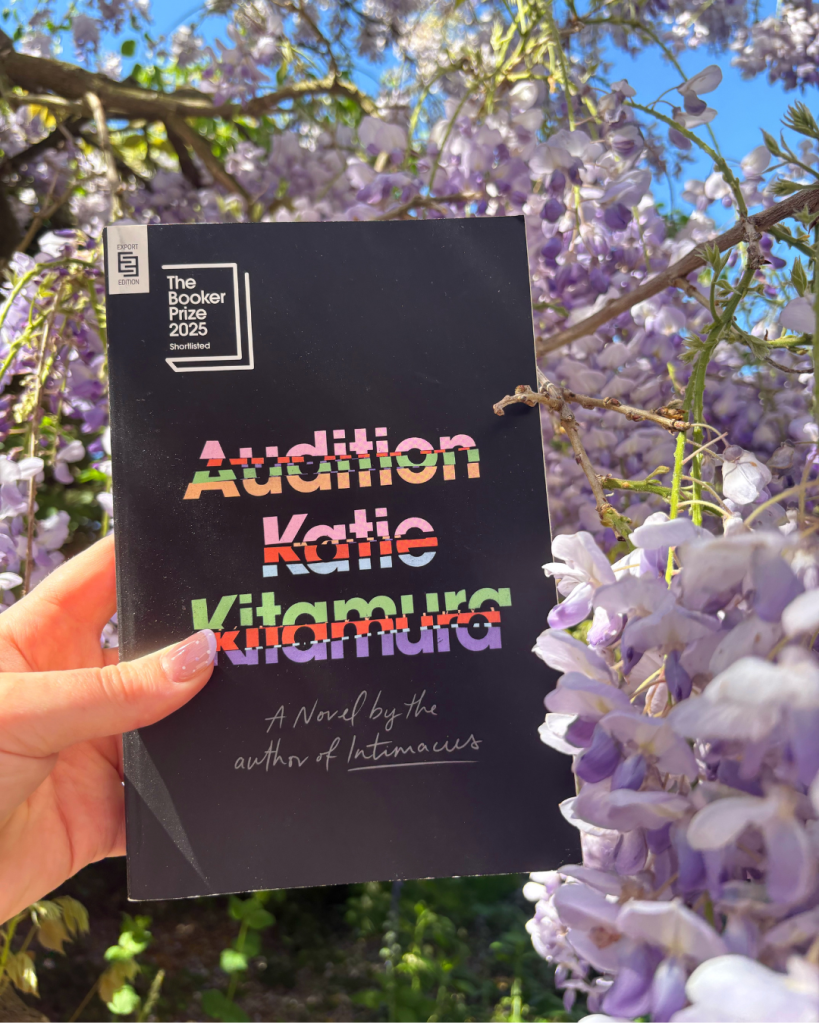
As mentioned in an earlier review, I normally love a novel spanning two or more versions of the same story. And I like an experimental style too. But as masterful as Kitamura’s prose is, Audition just wasn’t for me.
The novel follows our unnamed, unreliable female protagonist, a glamorous actress preparing for her latest stage show, where she must play a challenging scene that bridges two acts. At the same time, the novel is split into two acts depicting versions of her real life. In the first ‘Act’, she is approached by a young man who suspects he is her son (he is not). In the second ‘Act’, this same man is and has grown up as her son. The two parts give the protagonist the chance to act different parts, asking how we perform our roles and responsibilities to the people we love, and how our professional and social roles interweave. She is Actress throughout, responding to prompts and props in the real world as in theatre, interpreting every word and movement as if it were the stage. It’s unnerving and frustrating, because of course we cannot ascribe meaning to everything; life is messy and incoherent. It drives her and the reader crazy.
The novel is more question than plot. It asks, by using her as a character study, who are if we act all the way through our existence? Is every role we play a mask? Who is our character: a wife, a mother, an actor? A wife-actor? Her play is her life and vice versa.
This is where this kind of novel leaves me cold. I like to examine questions of identity by examining the character in relation to plot and action. Audition asks the reader about identity without there being one to use as a baseline. To me, the ‘parts’ our protagonist acts aren’t full enough; the ‘plot’ is herself, and that self is not particularly interesting or likeable. The ending too was chaotic and I struggled to make sense of it structurally; it left me with a sense of unease and even more questions. But this is the point: to continue you mustn’t try to control the narrative, you must accept the inherent contradictions and liminal space between reality and fantasy because it is fiction, not in spite of it.
I feel (and other reviews seem to agree) that this is a book you’ll either love or dislike. And I’m marking it up because it is undoubtedly Clever, a sign perhaps of my own literary snobbery. I think a lot of people will love it for all the reasons I don’t, it being the kind of post-modern, high-concept literature I enjoyed least when I read English at university. 3/5
A Guardian and a Thief, Megha Majumdar
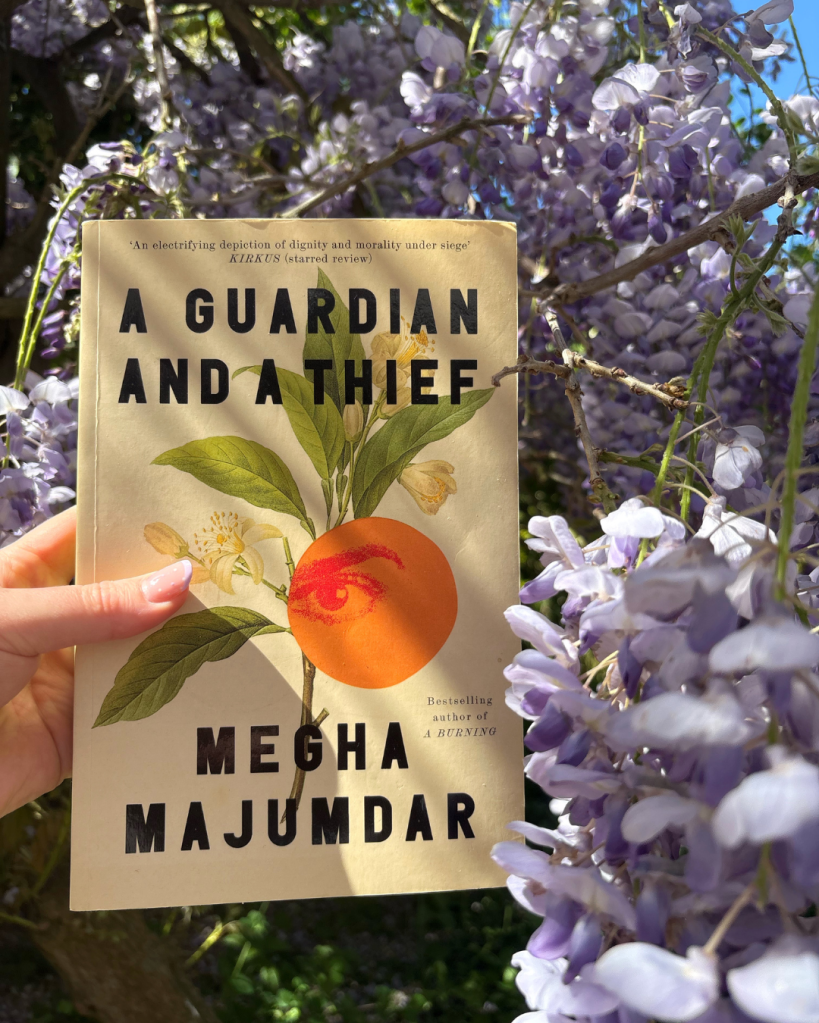
Wow, this was a tough one. Call me idealistic but I prefer a story where there is at least some molecule of hope by the end.
Set in a near-future Kolkata, India, where the famine, flooding and heat caused by climate change has tipped the country into crisis, Ma, her father Dadu and her two-yer-old daughter Mishta are in the last seven days before they immigrate to the US, where they’ll join Mishta’s father as ‘climate refugees’. In the midst of these final days, they wake up to find their passports and visas missing, along with the remains of their stored food.
The thief is a teenager named Boomba, who has travelled to the city to attempt to provide food, shelter and money for his family, who live in an even worse state than Ma and Dadu. At every turn he faces loss, corruption and discrimination and so he does what he must do: he steals and he blackmails.
The story is told to us from third-person perspectives of Ma, Dadu and Boomba. This was done well, with all three perspectives sounding authentic to their respective characters and ages. At the loss of their passports, a hot, claustrophobic panic sets in, reflected back by the society collapsing around them. Food is fought for and stolen; lies abound; everyone is out to help themselves and their loved ones survive. Morality is ambiguous and the question is: how far would you go to protect your people? Integrity and pride collapse in the face of imminent harm to the ones we love, even for characters like Dadu who believes in the decency of his city but who steals food from another infant to ensure his granddaughter is fed. There are several moments where we see our main characters directly displace the humanity of others in favour of their own:
“Ma looked away from the beggar, toward Mishti, more human than the human before her”.
This is a story about the nuances of human psychology. It is not rich versus poor, or good versus bad. While we get a glimpse of the ultra rich, the billionaire who lives within the city, apathetic to the poverty around her, the disparity between Ma and Boomba’s families is more subtle but euqally as important. While Mishti still cries from starvation and heat, Boomba sees her life as privileged in comparison to that of his younger brother, who lives outside of the city in a hut with no air conditioning. For this reason, we feel as much sympathy for Boomba as for Ma. His actions, which cause direct suffering to the lives of others, are motivated by the desire to save his own family in the same way that Ma’s are to protect Mishti. Both, we understand, are Guardian and Thief, as much as the other one is.
The climate crisis we currently face hasn’t reached the heights described in A Guardian and a Thief yet, but nothing about it seems far fetched. For me, the climate crisis was a background more than a main character; we understand its looming presence from their desperation, the scorching heat, their thirst for water. Majumdar’s prose is vivid and we feel the characters’ hunger through her descriptions of fresh cauliflower, of salty fish, of ghee on fingers and of thick, bubbling dhal.
As mentioned at the start, I did struggle with the fact that no character is offered even one moment of happiness or relief throughout, and the ending was unnecessarily bleak. The only relief we really get is the innocence and charm of Mishti, who is too young to have hardened to the world she inhabits. Her family’s love for her and Boomba’s love for his own, we understand, are the driving forces. But the point is clear: choices like these will force us to put aside our humanity and in a society like that, what hope remains? A Guardian and a Thief is a panic-driven cry, asking its readers to reflect on the choices they would make if they faced this not so unrealistic future. 3.5/5
Wild Dark Shore, Charlotte McConaghy
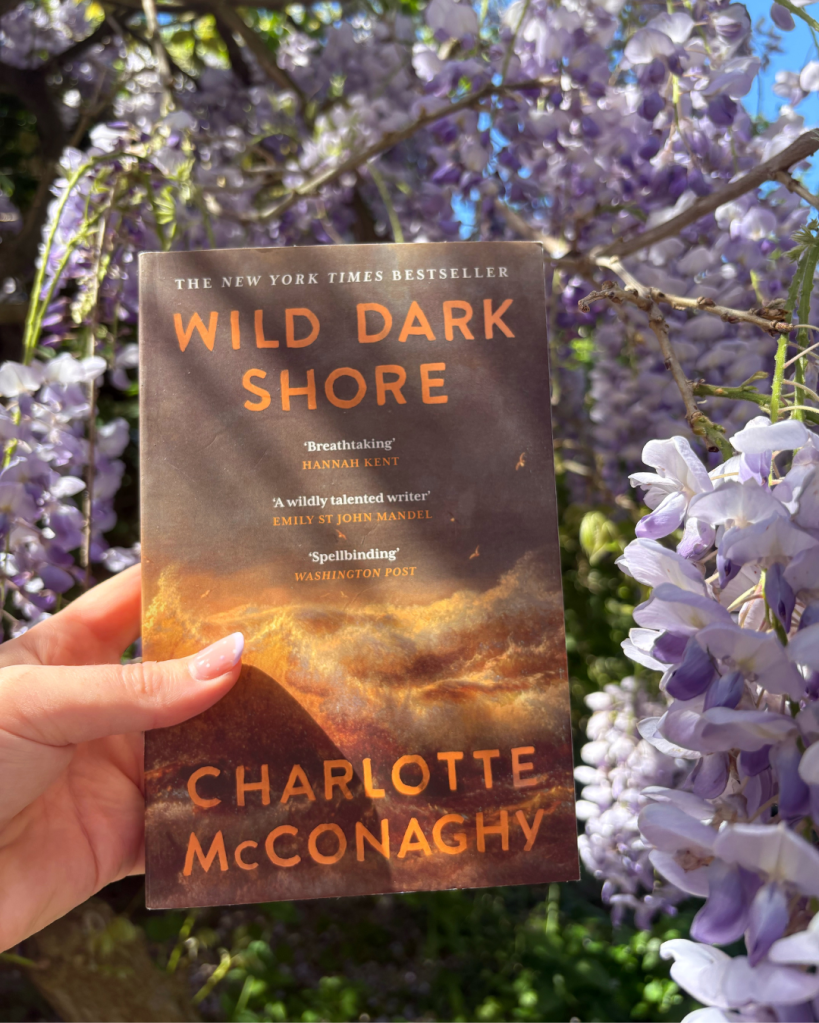
The best part of Wild Dark Shore was the lyrical, atmospheric prose that encapsulates the wild, uninhabitable, unrelenting beauty of the tiny, isolated island of Shearwater.
Dominic Salt and his three children are the last caretakers of the island, home to the world’s largest seed bank. The other researchers have abandoned the job at hand as rising levels threaten to overtake the island. As the Salts wait for their rescue boat to arrive, a woman is washed ashore, bloody and broken, but alive.
Looming in the background of this is of course, the threat of climate change, of a world disappearing. But on top of that is a sense of human unease, of things unspoken and hidden. This is where I feel the plot didn’t hold up. We’re made aware early on that Rowan, the woman washed ashore, has come to the island for an unknown reason and that Dom, the patriarch, is hiding something sinister from her. For the first half of this relatively short novel, they’re justifiably suspicious of one another. This makes the lust-to-love story that occurs out of nowhere in the second half totally unbelievable, and I struggled to understand how they got there. Not helping this is the fact that I found them both to be the least interesting characters. Frustrating too was the fact that, once love emerged, they continue to lie to each other. So many of the plot points emerged out of this dishonesty, including the emotionally overdone crescendo.
The wider issue I think is that the book was too short and underdeveloped to build up either of these two characters, or give enough span to the numerous themes attempted to be covered. The environmental conservation and climate change aspect, the wider question of our place as humans, animal cruelty, the sudden introduction of mental illness and suicide, of grief and trauma, sexual assault, motherhood and fertility, are all only briefly and jarringly covered but we’re expected to see them as motivators, as plot points. But by the end I struggled to understand what the author was trying to convey with any of them.
That being said, I very much enjoyed the ways in which the children have become wild and at one with the island. Fen sleeps with the seals on the beach, almost becoming one herself; Orly hears the island’s ghosts and forms an obsession with the seeds; Raf listens to real life whale song and plays it back on his violin. Although we’re aware that their isolation is unsustainable in the long run, they are also charming and visceral and representatives of a bygone age where children could be individuals. They and the animals are the best characters.
Overall, I loved the book’s exploration of the wildness of nature and the instinct to survive; the connection between the natural world and the creatures within it. The scene with the whale mother and her calf was beautiful. But it failed to mirror this poignancy into the two adult characters and human experience in general, which in my opinion was too ambitious and thus fell short. 3.5/5
The Best of Everything, Kit de Waal
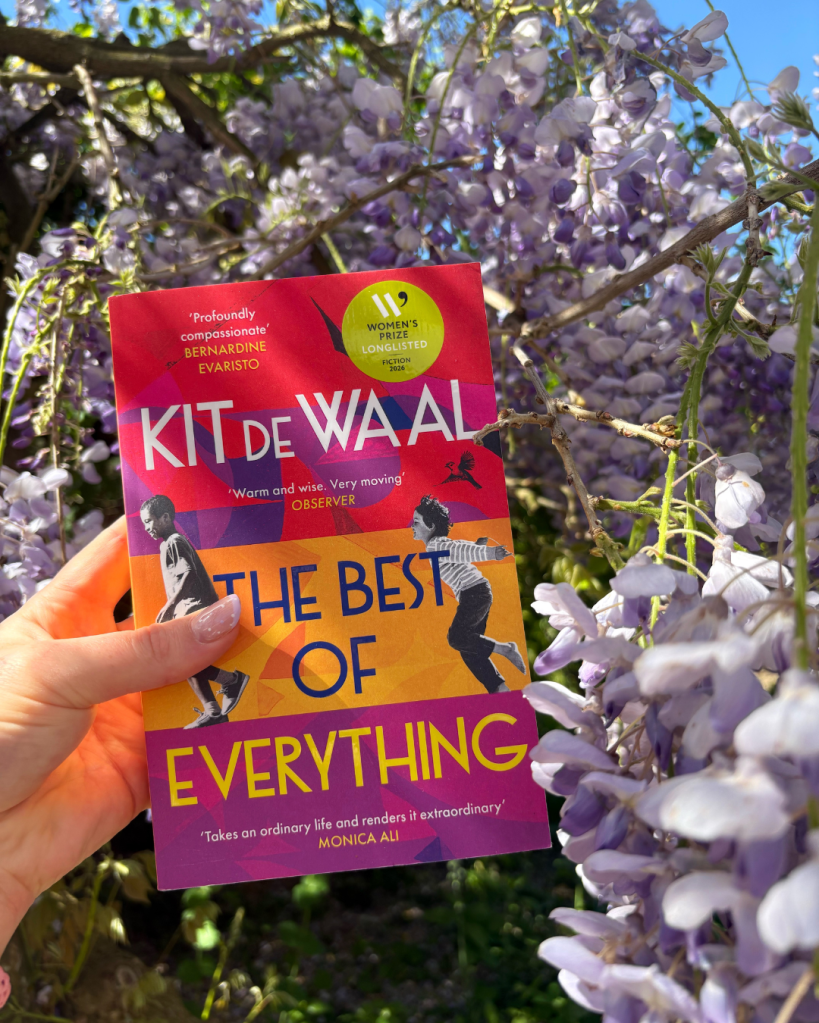
I really needed this read. At the heart of The Best of Everything is the message that fundamentally good people exist, and that acts of kindness to those around us have so much power.
This is the story of Paulette, an auxiliary nurse from the Caribbean island of St Kitts, who moves to Birmingham as a young girl. We meet her in her 20s, where she fantasises about marriage and a children with her boyfriend Denton. After she discovers that Denton already has a wife and family when he dies in a car accident, the grieving Paulette falls into bed with his best friend, Garfield, who is devoted to her and gives her the child she wants.
From here on we travel with Paulette through her life, witnessing her moments of grief, happiness, loss. Her son Bird gives her life meaning, which she struggles to keep a hold of as he grows up and away from her. She finds herself stuck, unable to let go of Denton and what he represented to her. That is until, when Bird is a child, Paulette’s life is given purpose again when she encounters the older man who caused the accident that killed Denton, and his little grandson Nellie.
Nellie’s mother had died in the same car crash and it is obvious that he is in desperate need of a mother’s love. Something about Nellie steals her heart, and she slowly allows Nellie and his grandfather, ‘Shirt and Tie’, into hers and Bird’s lives. Paulette takes on the duty of raising him almost as her own, her compassion and feeling for him transcending any lingering anger she feels for his grandfather, who she views as having stolen the ‘love of her life’. It is a powerful show of forgiveness and selflessness, but her love for Nellie is deep and steadfast, as is his for her. As we see him grow into a troubled teenager, he clings to her more than Bird does to his own mother. After Paulette tells a policeman that Nellie is ‘hers’ , his simple joy broke my heart: “He nods and smiles. ‘He’s mine’ he says.”
Paulette still has many demons of her own, from which de Waal doesn’t shy away. Interwoven with themes of love and duty are of course those of the diaspora; Paulette, Garfield and their son Bird are all black, where Nellie is white, and this is a distinction that shouldn’t be and isn’t ignored. This is Birmingham in the ‘70s, and racism, addiction, depression, loneliness and crime are all things Paulette and the cast of characters face.
But this is what makes Paulette’s character so compassionate, so likeable. Despite her own issues, she holds everything together without making it about her, making the young men she calls her own feel safe and grounded. She moves ahead no matter what, in their name. You get a deep sense that this responsibility to family, the way she takes on her load without complaint, is rooted in her culture, embodied by the rich descriptions of the Caribbean food she cooks and hands down to the boys.
Kit de Waal honours the kind of woman, one of so many, who live modest, ordinary lives, but who are extraordinary in their capacity to forgive, care and love. As her neighbour Maggie says: ‘You’d do anything for anybody Paulette. We have a saying, “In life, you should be the candle or the mirror. Either be the light in the room or reflect it.” And you’re both.‘ [Very Dorothea Brooke-coded may I add.]
Despite episodes of tragedy and sadness, this is a deeply life affirming book, written beautifully and with a light, accessible touch. It’s about the bonds of both blood and chosen family and about how giving your time and your love, no matter how little, can change how those around us experience their lives. 5/5
A Beast Slinks Towards Beijing, Alice Evelyn Yang
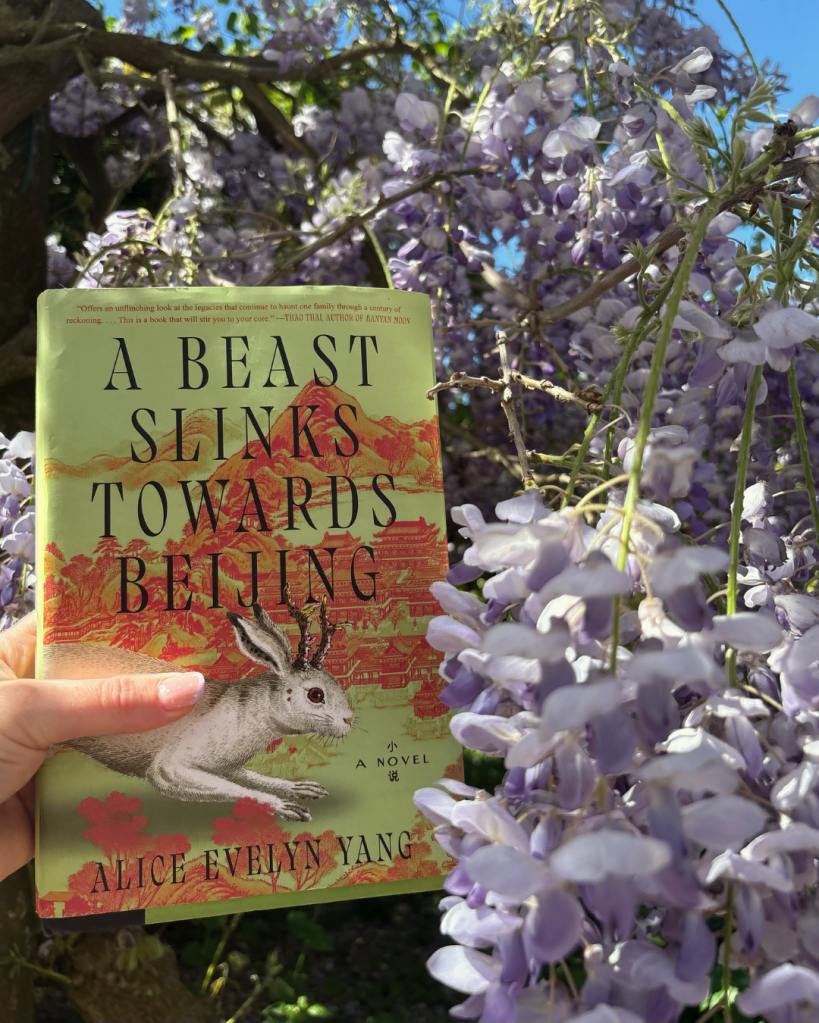
Magical realism isn’t a genre I would choose to pick up, but the genius of this book is how viscerally real it is in contrast to the magical realism that runs throughout.
Set over three generations, two of which detail horrific periods of China’s history, this is about generational trauma. Of course, this isn’t a new trope, but a fresh perspective on how far humanity can be pushed to its limits and survive is always interesting.
The novel’s structure, which moves non-linearly between three periods of time and characters at different ages, reflects the repetitive nature of trauma itself. We follow Qianze in present day New York, as her estranged father comes to deliver a prophecy. Qianze and Ba’s reunion is the beginning of the novel, but it is the culmination of everything that came before. After, we meet Ba, or Weihong, in his childhood during the cultural revolution in China, and then Ming, his mother, during the Japanese occupation of Manchuria decades before. Connecting them all is the spectre of a white hare with red eyes, and various other unearthly animals from Chinese mythology. Past trauma, horror, neglect and abuse seeps into the present, embodied by the ever-looming spectres of these distorted animals and visions.
Yang is very good at this. Her writing is precise embodiment; you feel the heat, the claustrophobia of Qianze’s tiny, one-bedroom apartment as her own mind turning against her; the smell of alcohol and sweat from Ba is a reflection of her disdain; the blood pouring from the infected ear of his father in turn, reeks like neglect. This becomes hard to read when the stakes are higher. There were features so grim, so viscerally disturbing when describing the atrocities the children in Mao’s paramilitary Red Guard commit against the “counter-revolutionaries,” and the sadistic cruelties inflicted on the women in the comfort houses during the Japanese occupation that I had to put the book down. It was bitter in my mouth.
But in many ways this is meant to distance us. It is the kind of suffering that is impossible for someone like me to understand. In refusing to sanitise the brutality, A Beast Slinks Towards Bejiing shows us humanity at its most deformed, and this is what the novel is about; how suffering putrefies nations, families, and eventually character and memory itself. The question is one of morality and its boundaries: what we are capable of to ensure the survival of our loved ones and ourselves. And every one of the main characters is flawed; both predator and prey. Destined to repeat the cycle of suffering by passing it down to children who inherit the damage without its history, by refusing to acknowledge it. The silence becomes a living demon.
We as readers, like the characters, must bear witness to the violence, because to turn away is to allow evil to live on. This doesn’t make the misery cycle less exhausting to read about and I don’t think the reconciliation at the end was as controlled as the rest of the novel. It didn’t just didn’t give enough balance against the trauma of the rest. But my god, a debut? Wow. 4.5/5
From my perspective, two 5* books: Heart the Lover, which is shortlisted, and The Best of Everything, which isn’t. I think Heart the Lover is a strong contender to win and I’d be very happy if it does, but in my opinion it’ll be the sweeping Flashlight that does it, which would be a great choice too.
If you made it this far: thank you and I hope you enjoyed reading my jumbled thoughts! Until 2027.
 hollyhamiltonwrites