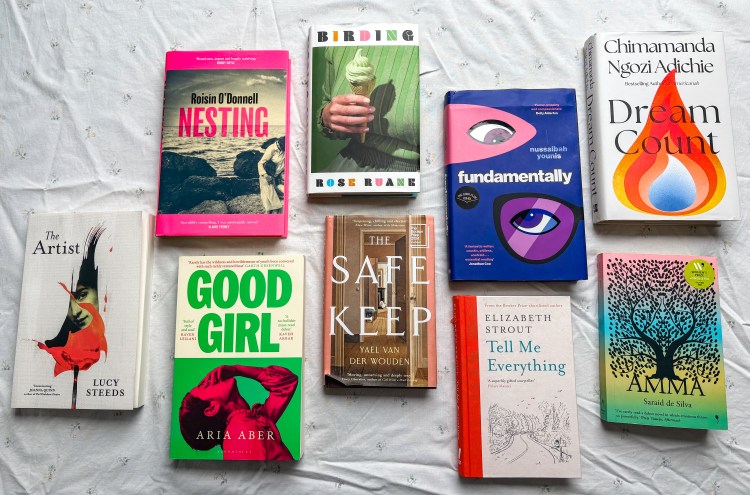
Women’s Prize for Fiction Longlist and Shortlist 2025: Review
After a break in 2024, I managed all sixteen books on the longlist before the announcement of the winner on 12th June this year. And although it was a particularly dark edition, I had a great time as always. Major themes around searching for identity, complex relationships between mothers and daughters, and cross cultural bonds permeated, and I’d highly recommend most of the titles. I’d love if you indulged my thoughts.

2023: A Reader’s Top 5
110 books in 2023! Alongside the mania of the Women’s Prize Longlist, I cried, giggled, seethed, plodded, and raced through a moveable feast of treats this year, in both paper and audiobook form. Here are my highlights.
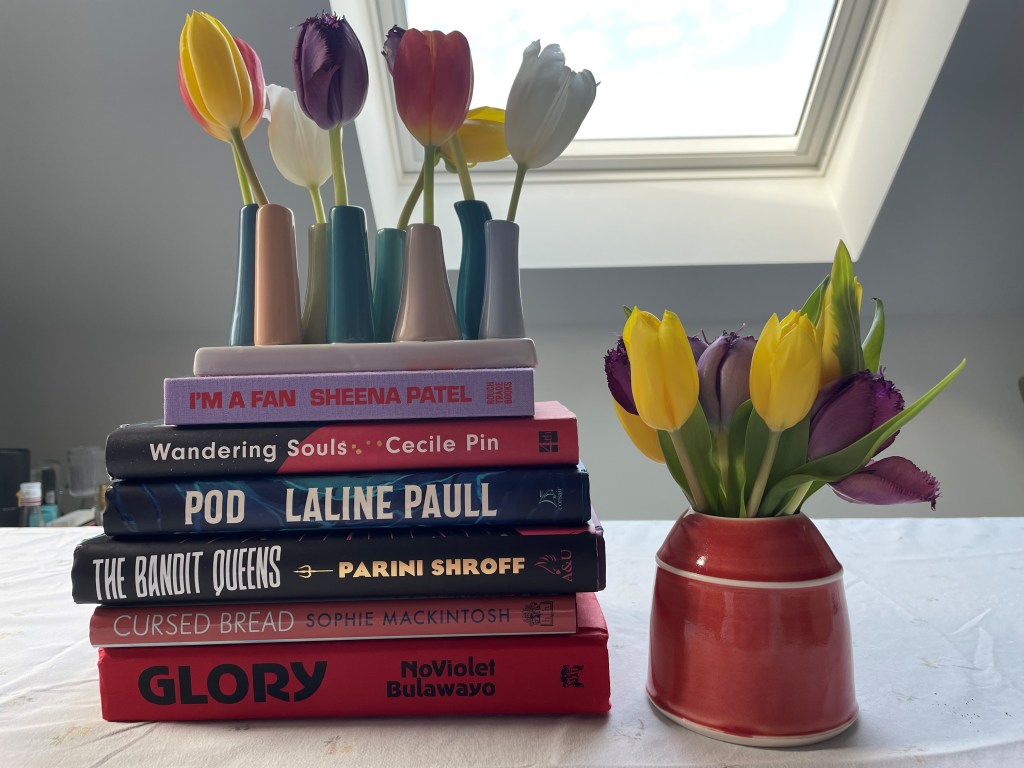
Women’s Prize for Fiction Longlist 2023: Review
Over the last few years, I’ve made it my very pleasant mission to work through the annual Women’s Prize for Fiction longlist, cheering along when a favourite eventually makes the shortlist or reeling in outrage when another doesn’t. It’s a challenge – sixteen books in six weeks – but doing so has brought my attention to books and genres I wouldn’t have otherwise chosen to read. It’s affirmed firm favourites, such as 2021’s winner Piranesi, as well as bringing other books such as Miranda Cowley Heller’s haunting The Paper Palace (2022), Torrey Peter’s groundbreaking Detransition Baby (2021), and Ann Patchett’s absorbing The Dutch House into my life. I managed 14 out of 16 this year. And blimey, was a good selection or what?! So, as I make my way through the 2023 pile, indulge my chaotic thoughts.

The Versions of Us, by Laura Barnett
Laura Barnett’s ‘The Versions of Us’ refuses to be a cliché. Three different versions of Eva and Jim’s story are told adjacently, after a pivotal meeting in which Eva is knocked off her bike as a Cambridge student in the 1950s. The premise of the novel hinges on the question of ‘what if’ – how certain encounters, decisions and actions can determine a whole different version of the path originally taken. But the novel challenges romanticism and is painfully realistic. The version in which Eva and Jim become romantically involved with each other immediately after the bike incident – indeed, the version in which they predict that their lives will be inextricably interwoven – is the version ending with an unhappy marriage, an affair and a separation.
The Overstory, by Richard Powers
“Our brains evolved to solve the forest. We’ve shaped and been shaped by forests for longer than we’ve been Homo sapiens.” So says Dr Patricia Westerford, in her closing lecture to a room of environmentalists in the final pages of The Overstory. As one of the nine main characters in the book, it is she and her work that represents most directly the central premise of the story: in her discovery of “how trees talk to one another, over the air and underground. How they care and feed each other, orchestrating shared behaviours through the networked soil”, she tells us that we have more in common with the natural world than we might think.


The New Wilderness, by Diane Cook
Set in a dystopian future where only three locations exist — “The City,” “The Wilderness” and the mysterious “Promised Lands” — Diane Cook sets up an apocalyptic landscape where climate change and global warming has destroyed the world in which we know, haunted by humans, their habits, and the memories of what came before. Diane Cook sets up an apocalyptic landscape where climate change and global warming has destroyed the world we know, told through the metaphor of a mother and child relationship.
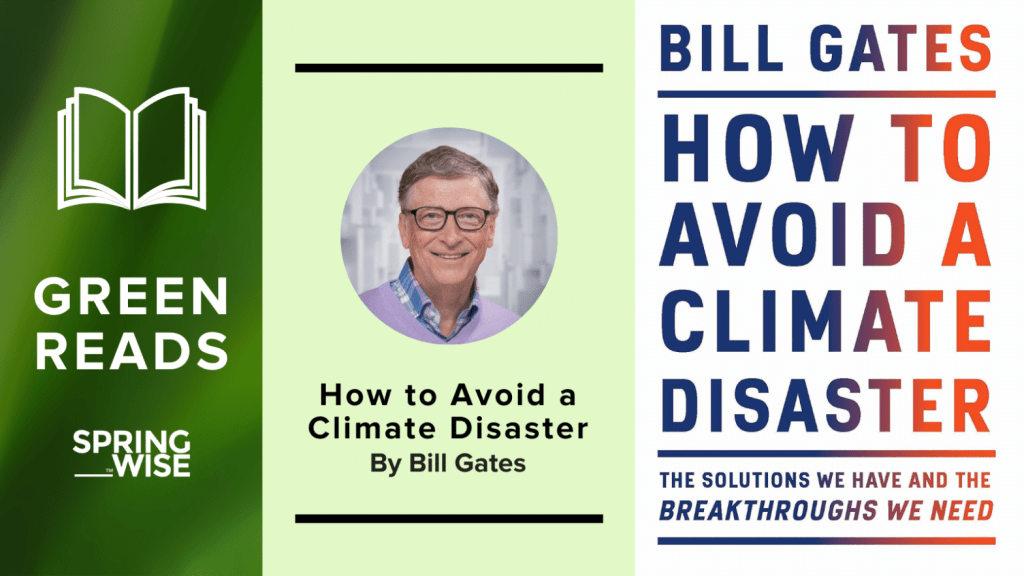
How to Avoid a Climate Disaster, by Bill Gates.
Reading a book by Bill Gates involves the preexisting knowledge that you are delving into the expertise of a man best known for his work not only in tech but in the energy and charitable sectors too. “Why should we listen to a man who claims to be an expert on so many things?” you might ask. Even the title “How to Avoid a Climate Disaster” is empirical, claiming to give us outright answers to a question that can seem overwhelming and endless.
 hollyhamiltonwrites