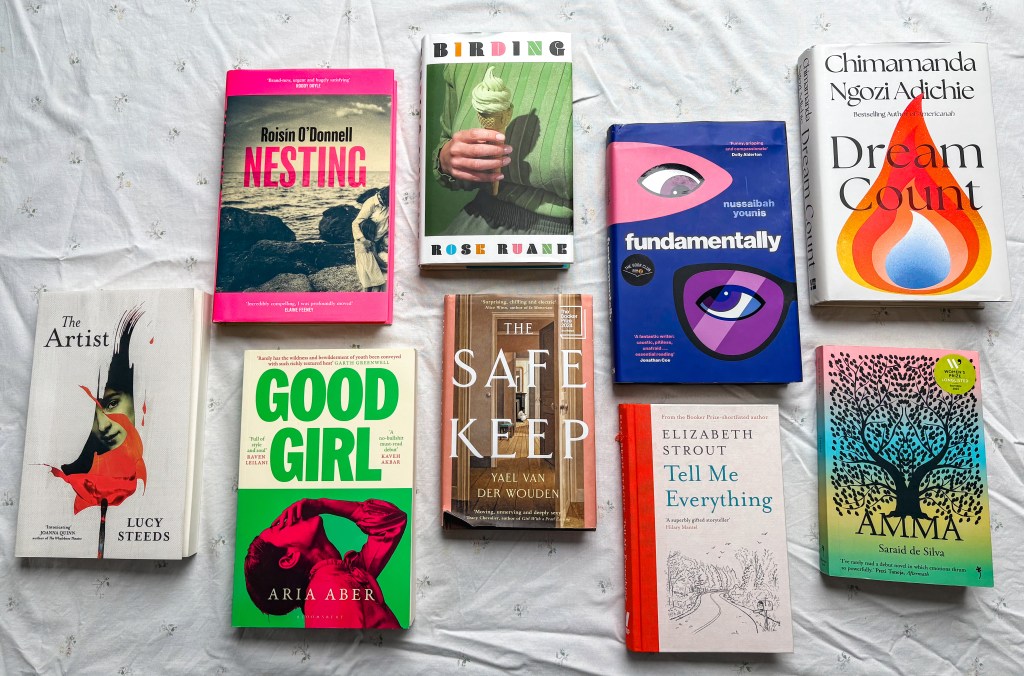
The great pleasure, at the risk of sounding glib, of making my way through The Women’s Prize longlist each year is to read about cultures and circumstances I have little to no knowledge of. One of the most interesting and refreshing themes of this year’s selection was cross-cultural collaboration; from the Polish–Jewish–Scottish–Palestinian intergenerational family panorama of Jenni Deiches’ Somewhere Else, to the Sri Lankan-New Zealander heritage of the three women in Saraid de Silva’s Amma. It’s also widely about collective inheritance: the scars we carry with us from acts we never personally witnessed.
I managed all sixteen this year, and although it was a particularly dark edition, I had a great time as always (although trigger warnings are listed for each title). I’ve written about the novels in no special order, but I’ve indicated if it made the shortlist. So, as I make my way through the 2025 pile before the winner is announced on the 12th June, indulge my chaotic thoughts.
other warning! spoilers ahead.
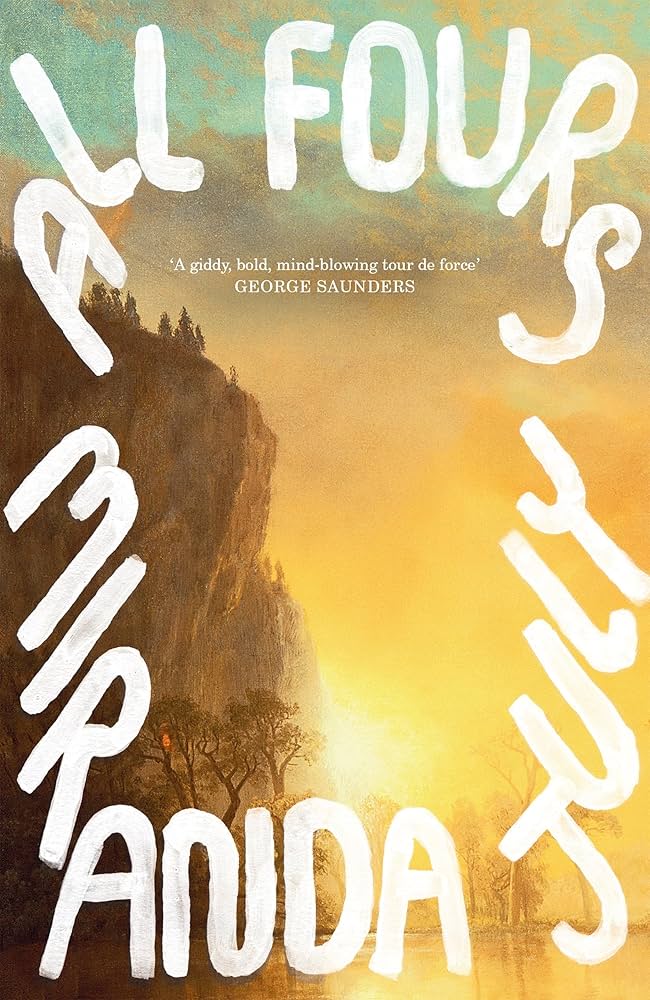
All Fours, Miranda July
-shortlisted-
t.w. explicit sexual exploration, infidelity, near-stillbirth, PTSD and flashbacks
I was very excited about All Fours. The story of a woman who sets in motion a chain of events that will challenge her and the readers’ ideas of sex, marriage, non-monogamy and self-discovery, seemed very much My Thing. And it lived up to these expectations. By pushing the limits of what a woman’s deepest, most secret, latent desires might be, it does its best to normalise them. I think this book was at its best when exploring the complexities of non-monogamy; the feeling of needing comfort and intimacy with the familiar; the excitement of being physical with the unfamiliar; the push and pull of desire. The book’s sex scenes, notoriously difficult to write, were also very good. It’s a book about intimacy in its rawest forms, but it’s also about the human capacity to do harm to ourselves and others.
This is where my issue lay. The main character doubts herself and oscillates in different directions at every point, and her self-absorption rubbed me up all the wrong ways. Nothing she does makes her happy. I struggle to enjoy fiction where I can’t get behind the protagonist (this doesn’t mean they have to be perfect: I’ve loved unlikeable characters, and this doesn’t mean I didn’t find this character relatable in some ways.) But the relationships she formed with others, especially on her roadtrip, were so unlikely, and her apathy towards her husband seemed egregious and he, in turn, unrealistic. I also think the book tried to cover too many topics, albeit important and brave ones. Sex, non-monogamy, infidelity, marriage and relationships are placed alongside infant mortality, gender prescription in children, menopause, death. Admittedly this is indicative of the complexity of living life as a woman, but in combination with the protagonist’s lack of stability, gave me whiplash. Her ultimate disillusionment and unhappiness was depressing and the brave and novel themes, short-lived.
Definitely worth a read, but in my perspective All Fours wasn’t the Important Read I was led to believe. 3.5/5
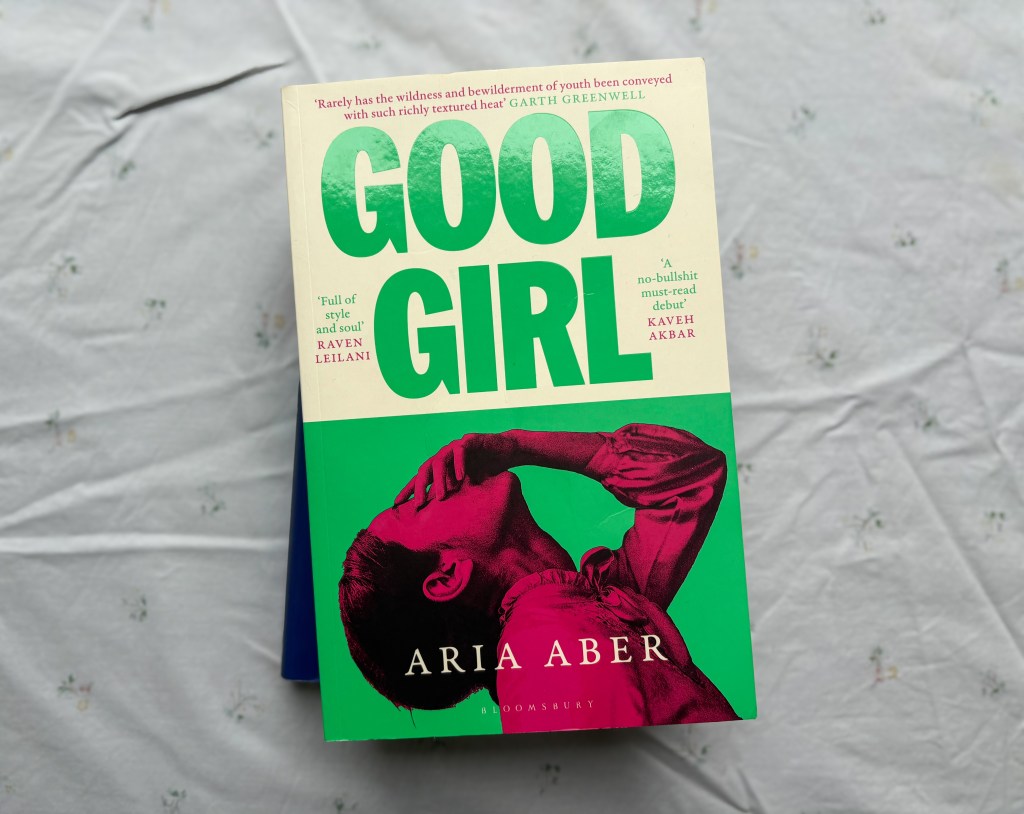
Good Girl, Aria Aber
-shortlisted-
t.w. abuse and coercive control, drugs, racism and death, neo Nazism
18-year-old Nila’s is an experience I haven’t read before: a second generation German-Afgan, who seeks nihilism and escapism from the poverty of her once-middle class, displaced Afghan family through the sordid underground techno scene of Berlin.
Alone, or latching onto older fellow artists, she attends ‘the bunker’, where she takes pills and lets men feel her up. There she begins an affair with 36-year-old writer Marlowe, who encourages her artistic aspirations and controls her life through sex, power and manipulation. Their intimacy is derived entirely from these dynamics from the start: where Nila believes she is gaining identity, she is entrusting her self-loathing to an older, more experienced enabler. Nila says:
“The goal of sex was not just to lose all sense of self but to forget death. Push and pull of desire, the blood and awkwardness, the strange odors and liquids, the power, which was both mine and his, regardless of submission – all these mechanisms produced the illusion of having stopped time.”
The way Nila falls into Marlowe’s trap was inevitable: which one of us with artistic aspirations and low self-esteem wouldn’t, at 19, be drawn in by the wiles of a famous older writer who poses just the right amount of threat? We see how in reaction to Marlowe’s increasing domination, manipulation and violence, Nila craves to be physically hurt, to be punished and demeaned for how she thinks the world sees her, and how she sees herself: the opposite of a ‘good girl’.
Because as much as this book is about sexual power dynamics, abuse and coercive control, art, philosophy and drugs, it’s about displacement, social hierarchy and under/overcurrents of Islamophobic violence in a post-9/11 world. The self-destructive world Nila seeks through techno is an escape from the one where her family apartment is graffitied with swastikas, her once successful Afghan father works in the local McDonalds, and violence looms. In reaction, in the underground club scene, she is “… ravished by a hunger to ruin my life.” She lies about her identity, telling people that she is Greek, Egyptian, Italian, Israeli, and that her name is Nila, not Nilab. During 24 hour benders with fellow ‘artists’, she gets high, discusses Kafka and philosophy and imagines a different life. She sits on the street chatting to homeless men for hours and shoots languid 35mm photographs with her intoxicated companions.
These descriptions were a sort of mashup of Skins and The Bloomsbury Club, one-dimensional and more appealing to a depressed, hormonal teenager. Considering the story is meant to be a retrospective, there is little self-reflection on Nila’s part on the destructiveness of these times in her past. I was glad that, by the end, these parts are placed in the wider context of her and her family’s displacement.
In short, I’ve both read, watched and consumed so many things like Good Girl, but the abuse and coercive control that arises out of Nila’s self-loathing and placed in a wider context of Islamophobia and racial identity is a new twist on the trope that was exciting and refreshing. 3.5/5
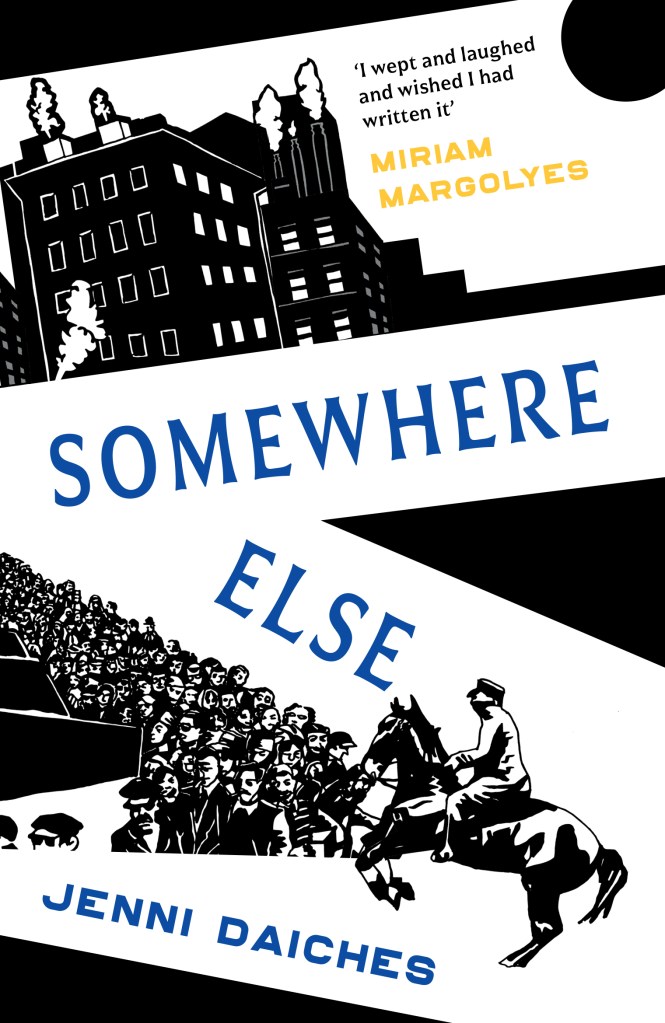
Somewhere Else, Jenni Deiches
tw: anti-seminitism, genocide, war
Five-year-old Polish refugee Rosa begins a new life in Edinburgh as the adopted daughter of Scottish-Jewish parents after the Białystok pogrom of 1906 wipes out most of her family. With this as its starting point, Somewhere Else is a multi-generational panorama of Rosa’s life for the next 90+ years, spanning four further generations of family, neighbours and friends and the historical events, religions and contexts from which they spring.
It is at first sight, an insight into the Judaeo-Scottish community and the antisemitism faced during the World War years and beyond. But to say this is a novel about a particular identity is facile; most of the characters in this novel are born from a host of cultures and contexts. Rosa herself is Rosa Roshkin at birth, Rosa Solomon when adopted, Rosa Mackintosh after she bears the child of the son of her Scottish neighbours, and Rosa Kransinski when she later marries a Polish army captain she meets in Edinburgh. Her daughter, Esther, is half-Scottish; later, Esther has a son with a Palestinian man she meets during Partition and from whom she is separated and later, a daughter with a boatman from the north of Scotland.
“‘Do you remember when Callum took us to the Bass Rock and we weren’t able to land?’ Esther asks Yossi.
He nods. ‘That’s where it all began,’ she continues. ‘Two very different seas.’
Yossi and Sarah do not understand at first.
Esther smiles. ‘Your fathers. The Sea of Galilee and the North Sea. Listening to the cicadas in the warm dark and quiet water of Tiberias and the howl of the east wind and the screaming gulls of North Berwick. Two very different men.'”
These cross-cultural identities are at the heart of the novel. It takes a step back from the individual and examines how we are all linked with our shared universal history. Bolstering this are key events from the 20th century that form a background to the novel, both explicitly and indirectly. From the Polish pogroms we move to the impact of the World Wars, to the General Strike, the Wall Street Crash, the Spanish Civil War, World War II, the aftermath of the Belsen-Belsen camp, the move of Jewish settlers to Palestine, the wars of 1947-48, post-independence upheavals in Kenya and much more – through to Scottish devolution, the rise and fall of Thatcher, the demolition of the Berlin Wall and so on. By the novel’s close on Rosa’s 100th birthday, at the same house where she was taken in 1908, her family have crossed the world and its cultures. A myriad of tragedies have happened, and identities have been formed in the most unlikely circumstances.
Sadly, often what can be said in one line on this novel is expressed in five, and it could have used a more thorough editing. By the end I was starting to lose track of the new characters introduced and by extension, was less invested in them. Overall though, the centre of the story is about how history and tragedy will happen, but trauma can be met with resilience and humanity and be transformed into something new and beautiful. Most of all it is a story about the most unlikely human ties, and the strongest bond of all: family, the one you are born with and the one you choose. 4/5
The Artist, Lucy Steeds
t.w. war

In 1920s Provence, a timid British art journalist, Joseph, has the opportunity to witness and report on the work of the famously reclusive and eccentric artist, Edouard Tartuffe, a man whose art “defies definition”. The story is told through the perspective of both Joseph and Tartuffe’s niece, Ettie, who has spent her whole life looking after Tartuffe, making his meals, clipping his toenails, cutting his hair, and preparing his brushes and canvases.
It’s a simple, unapologetic story that has been told before: a uniquely Female Bildungsroman. Ettie’s secret—her own desire to paint—is about a woman breaking social and educational barriers to leave behind a half-life and pursue the one she believes herself capable of. That there was more to Ettie and that the story would centre around her came as no surprise to me, and nor did Joseph and Ettie’s inevitable, passionate love affair.
But the two main characters in this story are not the two characters who tell the tale. These characters are Ettie and Art – or, more specifically, Colour. In the background there is the assumed presence of artists such as Monet and Renoir in 1920s Provence (although the name dropping of figures like Cezanne was a little crude). But the colour dripping off the page is not just cultural. To read this novel is a sensory experience: you can smell and sense the beauty of the Provençal landscape, the texture of the brushstrokes, the taste and shape of the food, the passion of the artists and lovers, the sweat on their skin in the heat. It is a story both narratively, culturally and linguistically infused and rich with art, colour, the senses. Lending further linguistic texture is the fact that although the novel is written in English, the language of communication through the novel is understood to be French.
This is where the dual narrative structure was a little off to me; I found it hard to be invested in Joseph, who despite telling half of the story, fades into the background to make way for these two main characters. And while I will always enjoy a women’s coming-to-herself narrative, the main joy of this book was the sensory experience of reading it, and the love of art and painting that shapes it. 3.5/5
Tell Me Everything, Elizabeth Strout
-shortlisted-
t.w. child sexual assault, murder, suicide, aging, cancer, death
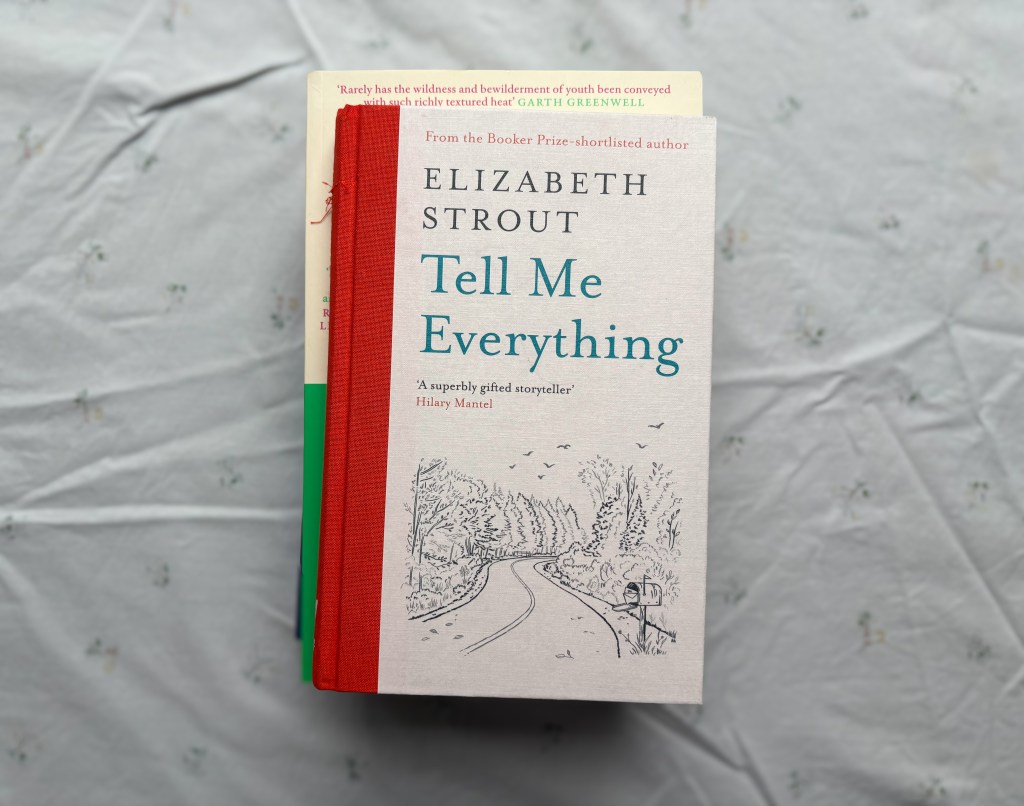
Every time you dip into Elizabeth Strout’s writing, you return to the same beloved characters. It is implied that just as you know them, they too know themselves better than when we last left them. Back in Crosby, Maine, this a story that brings together all of the beloved characters from the Amgash and Kitteridge series – namely, Olive Kitteridge, Lucy Barton, Bob Burgess.
I used to think that sadness and statis was the tone of these books; the mundanity of the ordinary. But as I was absorbed into the lives of these people, written about with such humanity, I realised that its pathos, its empathy, is the point. The way in which so many of her characters interact is a reflection of how Strout writes character: with deep care, empathy and nuance about human interaction, about the extraordinary lives lived by ordinary people. What it is to be human with the all the vulnerabilities we have. One of George Eliot’s most famous quotes to come out of Middlemarch comes to mind:
“But the effect of her being on those around her was incalculably diffusive: for the growing good of the world is partly dependent on unhistoric acts; and that things are not so ill with you and me as they might have been, is half owing to the number who lived faithfully a hidden life, and rest in unvisited tombs.”
[sorry, wouldn’t be a review from me without a George Eliot quote shoehorned in]
This is a deeply character-driven book, as all of Strout’s are, and although there is a local murder scandal, even this points to the background, the family and the souls of those involved. There is trauma, of course—childhood sexual assault, murder, suicide, aging, cancer and death. But what you notice is the happiness and joy that lights the lives of these people; the ways they fall in love and choose to love and respect each other. One of the focal points of the book is where two of its main characters, Lucy and Olive, meet to tell each other various stories about love that they have picked up throughout their lives.
Through these characters and stories, Strout is asking, “What does anyone’s life mean?” whilst also making it clear how important human relationships are to keeping us sane. Lucy’s reflection to Olive at the end that “Love comes in so many different forms, but it is always love,” sums up these books in their entirety. 5/5, absolutely no notes.
The Ministry of Time, Kaliane Bradley
t.w. racial microaggressions, climate change, violence against women, homophobia
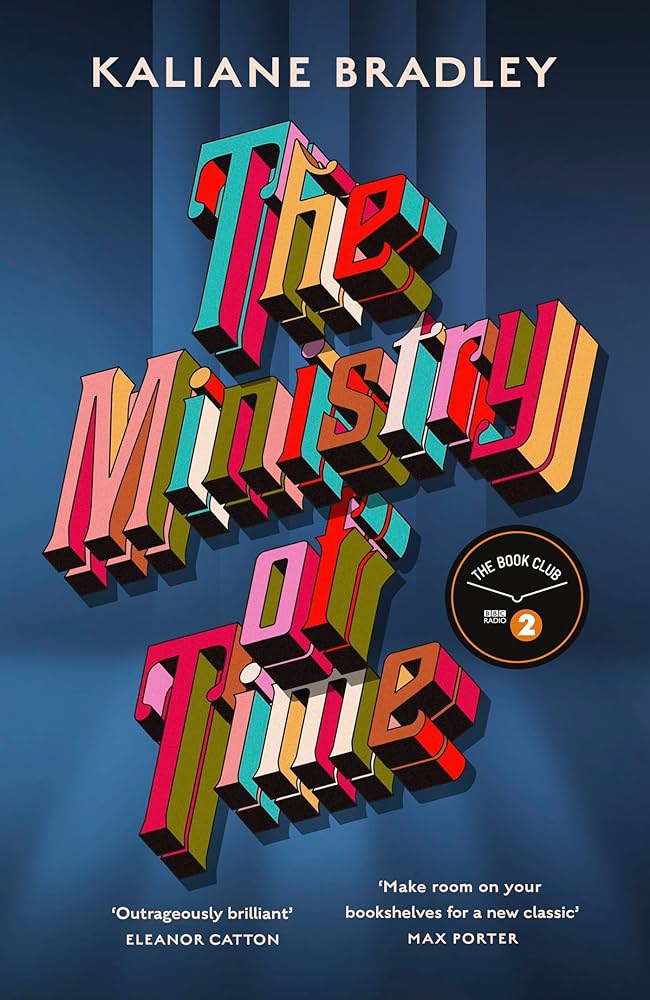
I wasn’t aware of the negative noise around this book before I started it. Set in the near future, our unnamed British-Cambodian narrator begins her work at a secret government agency dealing in time travel. Our protagonist is tasked with being the ‘bridge’ for one of five ‘expats’, plucked from the past, where they were doomed to die prematurely in their own timelines. In the present, their physical and mental adjustment is monitored. Our narrator’s real-life historical figure is Commander Graham Gore, who died in the failed Franklin expedition to the Arctic in 1847. A love affair between the two ensues, as does the chaos of the expats’ adjustments and the ways in which they are threatened and pursued by looming powers.
I found the premise of the adjustment of these five ‘expats’ the most compelling , and there are some really moving moments between Gore and the narrator.
“You’re a musician. How can you have no sense of time-keeping?”
“You are a larger instrument than a flute.”
“I bet you say that to all the girls.”
However, my main takeaway is that although the novel attempts to genre-bend, it ends up doing too much. By focusing on characterisation, the themes of history, colonisation and gender represented by the expats could have been further developed. Alternatively, a larger focus on the novel’s sci-fi elements could have made it a very different type of book. As it happens, by focusing on them both, neither theme is properly explored. The characters never feel fully formed, and most of the ways in which the expats react to the present are pretty predictable—they are confused by bikes, hate pop music and are baffled by revealing clothing on women. There are also some pretty clunky metaphors, and it’s paced pretty poorly. For the majority of the novel, we follow the expats adjusting to present-day life, falling in love and not doing much, and then in the last twenty per cent, it turns into a high-paced, confusing sci-fi spy drama with an anticlimactic ending that we never really get to the bottom of.
The added layer of romance and sex is an extra, predictable distraction, and it is pretty obvious that this was the theme the author was personally invested in. Perhaps it is not surprising then that this book has been labeled commander Gore ‘fan fiction’ by many critics. I ultimately think this could have been a much better read with a better focus on general characterisation and with proper direction, pacing and editing. 2.5/5
Nesting, Roisín O’Donnell
t.w. marital abuse, coercive control, sexual assault, childbirth, miscarriage
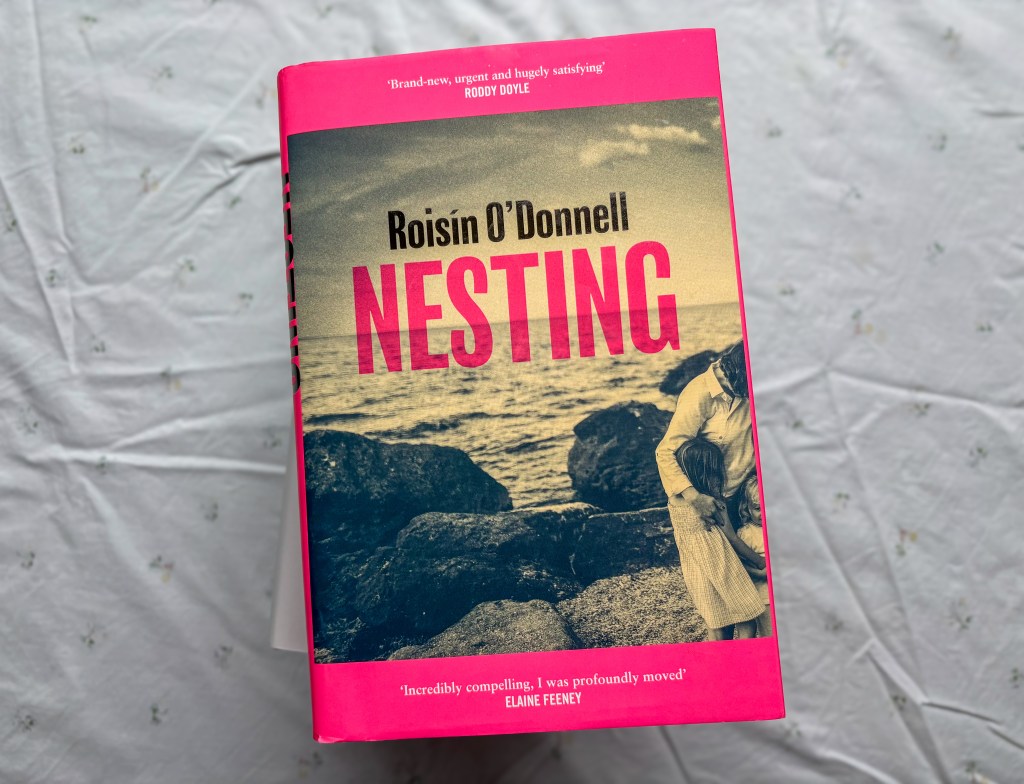
My heart was in my mouth for the duration of Nesting. This wasn’t a happy or relaxing read, but it ended up as one of the most fulfilling. Nesting revolves around Ciara Fay, as she attempts to leave her emotionally and sexually abusive husband, Ryan. Set in 2018 Dublin, the reader soon discovers that this is Ciara’s second attempt to leave Ryan. His coercive control extends to his handling of their money and as Ciara lives far away from her immediate family, she is both financially and logistically helpless. In a split second decision, she bundles herself, her two daughters and her unborn child into a car, finding them a place to stay in a hotel run by the broken housing system in Dublin.
There, as Ciara finds herself surrounded by eccentric and deeply caring characters, her sense of self and determination to stay away from Ryan grows. This is despite the relentless onslaught of Ryan and his family, who are cruel and abusive in their attempts to make her return. It is a desperate read, as we see how the whole system is set up to make returning to the nuclear family unit the easiest option for Ciara, despite the repercussions. Ciara and her neighbours must sign into their rooms before 8pm every day or risk losing their place at the hotel. As she tries to find permanent housing for herself and her children, she is consistently turned away for being a single mother, securing housing only when she wears a short skirt and pretends to be married. Moreover, Ryan and his family make it clear to Ciara that a court would rule in their favour if it were to be discovered Ciara had moved her children into the hotel.
But most pervasive is the effect of Ryan as he attempts to control Ciara from afar. She feels constant guilt at having taken her children away from their father, at the same time as she doesn’t want to leave them alone with him in fear of what he would do to them.
“Leaving is one thing, but staying away is another.”
His attempts at control grow ever more disturbing in light of her growing strength and the longer she stays away. We discover he has been tracking Ciara through spyware in her phone. When she finally finds a new home for herself and her children, Ryan manipulates her into allowing him to stay for a ‘few nights’, which culminates in fresh sexual assaults and Ciara’s withdrawal from her new friends.
Ryan’s control is sickening and you never blame Ciara, even when she is tempted to return to him. This is a deeply understanding novel: the message is, it is okay to make mistakes, it is okay to take a step back, as long as you keep moving forwards in the end. It is a book about the power of family, but not of the nuclear family. Ciara is powered by love for her children, and she is supported from afar by her mother and sister, but I think it is reductive to make motherhood the driving force of this novel. It is the chosen family she finds herself surrounded by in Dublin who give her the strength to start anew. In these situations, the unlikely friendships that form are a lifeline. These friendships, along with moments of Ciara’s growing strength, are what propels Nesting along, offering moments of hope alongside despair.
This is the opposite of an easy read and full of trigger warnings, but it is a necessary, haunting, and multilayered one. 5/5
The Safekeep, Yale van der Wouden
-shortlisted-

t.w. the holocaust, contentration camps, war, homophobia
One of my favourites of the longlist, and I’m so glad it made the shortlist. This is admittedly partly because it is set in the Netherlands and is spattered with thoughtful, untranslated Dutch, creating a dreamy nostalgia for a Netherlands I have never known.
Set in 1960s Overijssel, this is a story of desire and mistrust, and of obsession and romance. In the aftermath of the Second World War and after the death of her parents, Isobel lives an isolated life in an empty house. She is both controlling and controlled, an unlikeable character who is too old for her 30 years, and who makes lists of household items to check that her maid isn’t stealing from her. Her life is thrown off-balance when her brother, the ‘owner’ of the house, abandons his latest girlfriend, Eva, at Isobel’s door for an undefined period.
There is an immediate atmosphere of heat and paranoia when Eva enters the narrative. She serves as a foil for Isobel, touching her things, walking and talking around the silent house too loudly and setting Isobel’s teeth on edge. While she at first suspects Eva’s girlish and overfriendly nature to be hiding something insidious, this turns into full blown obsession when household items begin to go missing. With long passages of Isobel’s internal monologue and well-crafted descriptions of the body language between the two women during the long periods of silence between them, the reader is sucked into Isobel’s paranoia. She begins to follow Eva around the house, culminating in a particularly intense scene where Isobel touches Eva for the first time. Inevitably but no less powerfully, the obsession deepens into infatuation. This only becomes more intense as the backdrop of hazy, sweltering summer backdrop comes into the foreground, simulating and encouraging the way Isobel’s controlled outer shell is overcome by her unravelling.
This is a novel dripping with sex and sensuality and atmosphere. The sex scenes between the two women are explicit and very well written, more sensation than action and full of heat and hurt.
This is a story of repression; of how Isobel’s place in society limits her, and how she internalises these limitations. But it is just as much a story of historical dispossession, inherited guilt and reparations. The concept of ‘home’ and ownership is interrogated by the pretty predictable plot twist at the end, but I didn’t think this predictability took away from the power of its sensual, all-consuming writing and meaning. I also don’t mind a sentimental ending, and would be very happy to see this win. 5/5
Fundamentally, Nussaibah Younis
-shortlisted-
t.w. islamophobia, war, radicalisation
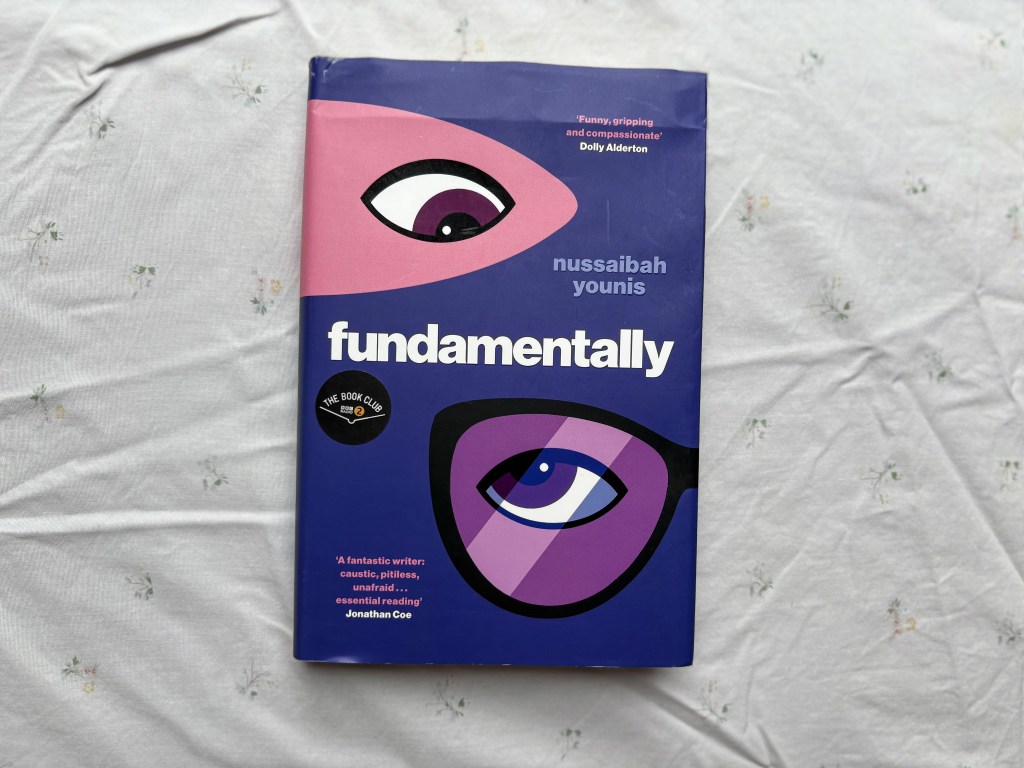
It’s when the subject matter of a book is the most serious that the genius of its humour stands out. This is by far the funniest book in the long and shortlist, which for a novel about ISIS brides is saying something. It’s also for this reason that it’s the most controversial, and why it may not win. The tone can be hard to reconcile for some people; for me, this is intentional and why it works.
Nadia is a heartbroken academic who gets scouted to work on a contentious UN project working to deradicalise and repatriate ISIS brides in Iraq. Putting her PhD into practice, she begins the process of navigating the often insane UN bureaucracy and the personalities working within it. In one of the camps, she bonds with Sara, a sharp and foul-mouthed East Londoner who joined ISIS at age 15. As someone who was almost radicalised at a young age herself, Nadia vows to get her home. As the novel progresses, we see how this process is as much, if not more for Nadia herself. Indeed, Sara struggles with the notion that she needs to be deradicalised at all.
Some of the funniest parts of Fundamentally are its depiction of the UN, which is constantly throwing around bribes, justifying its budgets and covering its tracks. This keeps the tone light, whilst also calling into question the ethics of the programme and all international aid efforts in general. Equally as funny are the host of characters working with Nadia, including a white hippy Sheikh who travels from California to ‘help rehabilitate’ the women. It is made clear that every person is there to fulfil their own white and brown saviour complexes in different ways.
Nadia is a wickedly witty narrator; she is brash and offensive, but’s she’s also wry and insightful, a true millennial who deeply cares for these women and especially Sara. Younis treads this line carefully, in a way that still cements the book’s central questions:
“I’d heard that ISIS considered white converts to be the most desirable brides. Imagine fleeing Europe for the land of Islam, and you’re still second fiddle to some white girl who’s lost control of her gap year.”
As someone only a little familiar with the UN and the politics around ISIS brides, Islam and terrorism, I appreciated the subtle ways in which Nadia’s perspective is shaped by both her mother’s strong religious views and her own Western values. We see her slowly trying to impose these values as the ‘right’ ones onto Sara, who doesn’t want or need them. The point is clear; the West needs to stop patronising people in majority Muslim countries with our own perspectives. However, I do understand that for someone with a deeper understanding of these topics, the themes are somewhat surface-level, or stereotypical.
Yet the book’s central premise—how can we save someone who doesn’t want to be saved?—is clear. It is about the politics of victimhood, belief, faith, love and family and how we navigate the world through our beliefs. To this end, Younis tread the line between dark humour and creating awareness of how radicalisation can’t be separated from the way that Islam has been stigmatised, very well. Writing a novel about ISIS brides has got to be tough, and I loved it. 5/5
A Little Trickerie, Rosanna Pike
t.w. child sexual abuse, homophobic violence, infant death, sexual assault and attempted rape, ableist violence

Finally! A much-needed uplifting read on this year’s list. There are serious topics covered in A Little Trickerie, including violence against women, homophobia, child abuse, sexual assault and religious corruption. But its setting in early Tudor England gives this read enough cognitive dissonance that it’s saved from being a truly traumatic read. As does its protagonist, the gung-ho, sharp and charmingly naive Tibb Ingleby, who is left to make her own way in life at aged 8 when her murderous but loving ‘ma’ dies in childbirth. Along with her newfound companion, Ivo, she makes her way through “this shit land called England” with a variable cast of loveable characters in a bid to survive and ultimately find “a roof” — i.e., a home.
Her stream of conscious style narration is eclectic and unique, written as one who can’t read or write but who has a strong head on her shoulders and who thinks and says what she feels. It is a perspective we don’t hear from often. Tibb and Ivo and their companions are the persecuted and judged in a Tudor England led by a corrupt church; she is has never been part of society, and so her opinions are at once far too old, and far too naive for her age. As vagabonds, both Tibb and Ivo are at risk of serious punishment and their witty adventures are peppered with times where they witness great cruelty and public shaming of others, a fate that would also greet Ivo if it were to be discovered that he is a gay man. Yet within these vignettes of great cruelty and hypocrisy, Tibb’s singular wit lends a levity that keeps you reading. It is darkly comedic, irreverent, full of Tibb’s witticisms and swearing, and I personally enjoyed the final great ‘trickerie’ and the neat way in which things resolved themselves.
I’ve heard criticism that the irreverent style doesn’t work in handling the bigger topics of abuse and trauma. But I think that is its strength and sets it apart from some of the other choices this year. This was never supposed to be real historical fiction. It is about bigotry and prejudice, and about the opposite: open-hearted love, and the ways you can call people and places ‘home’. Gutted this didn’t make the shortlist. 5/5
Amma, Saraid de Silva
t.w. sexual assault, intergenerational trauma, domestic violence, homophobia

Another intergenerational read, this time a non-linear plot following the lives of three matrilineal women with Sri Lankan heritage. The story alternates between Josephina, the titular Amma, her daughter Sithara, and her daughter, Annie, as they all navigate their place in the world, culturally, geographicallyand sexually. It is a story about intergenerational trauma, with each woman telling their unique story in the third-person perspective, linguistically linking them all through more than blood.
The story moves across timelines and ages, centring around the main event of the novel. In Singapore 1951, ten year old Josephina kills her middle-aged rapist, triggering a series of events, dynamics and traumas that inform the lives of all three women. By moving across key moments in the three women’s lives, we are given the bigger picture: that of diaspora and fitting in, and about who you are when your whole life has been defined by spoken and unspoken intergenerational trauma.
Josephina’s violent introduction to sex informs a lifelong attraction to dangerous men, which resurrects itself in her daughter Sithara. This running theme of violence also informs the way the three women retaliating with violence at different points in their lives. They do not know about the man Josephina killed in her youth, but when they find out, everything makes sense.
“Gran killed her rapist. Somehow this is not new; it is like a song Annie is listening to decades later, remembering all of the lyrics. Gran killed her rapist because of course she did. Annie sees the three of them — Gran, Mum and herself —swimming in the same dark water. They don’t cross paths, they just stay side by side, keeping their eyes locked on one another.“
Amma is written beautifully, with rich, smooth prose. Although the subject matters are serious, this keeps the novel from being too heavy or laboured. We see all characters as equal in their own right, partly because we see them all at different stages of their lives, rather than respective age brackets. Their difficulties in finding a place in the world is a mirror to how they struggle to find a place with each other.
Although I did enjoy the non-linear narrative, I found it a little hard to keep up with at times. But the deft writing and deep characterisation of the main three women kept a line throughout. And its ending message—that trauma across generations, that fitting in, that finding your place in the world—is easier to bear when there are no secrets and no judgement and when families are united, is a message I thoroughly concur with. 3.5/5
Birding, Rose Ruane
t.w. sexual assault and abuse, coercive control, depression, #MeToo

This is a haunting, evocative book that still manages to be sweet and hopeful. It centres around two very different women in their middle age, both of whom live in a bleak, unnamed seaside town. Lydia is a one hit wonder pop singer who, now living in relative obscurity, is grappling with a recent conversation with her ex. In the aftermath of the #MeToo movement, he has offered a self serving apology about his past behaviour towards her. Stunned and disorientated, reconsidering everything she ever understood about her lived experience, Lydia moves in with an old friend in order to process this shift. Our second protagonist Joyce was born and raised in the seaside town and due to a few implied behavioural issues, lives with her neurotic elderly mother, who controls every aspect of her life. They do everything together: wear the same clothes, style their hair in the same fashion, visit the same club every week, and Joyce is subjected to an almost constant onslaught of emotional abuse at her mother’s hands.
It’s easy to misread the slowness and lack of plot within Birding, but this claustrophobic ennui is exactly its point. Nothing expresses this more than the house in which Joyce and her mother live, with its porcelain figurines and viscount biscuits. Indeed, one of Birding‘s strengths is this evocation of setting; there is a glamour to the book, symbolised by the town which, once regal and thriving, is now rotting and abandoned, much like our main two characters. Yet Birding is both about the stasis of these women, but also of their desire to change their lives, even at a later age. A series of moments in the novel trigger these changes for them, and for a brief moment, bring them into contact with one another.
Although the honesty about several moments of abuse is harrowing, there is deep hope and pathos, as well as some moments of real wit and humour. You believe in the small, incremental changes that these women are making to better their lives and free themselves, and in the moments of beauty visible in everyday life. 4/5
The Persians, Sanam Mahloudji
-shortlisted-

t.w. revolution and displacement, prostitution, restrictive roles for women
The Persians follows several generations of Iranian women from the Valiat family. In the aftermath of the Iranian Revolution, some immigrate to the US, while some remain in Iran for the duration. In the present day, this has lead to a fructuous relationship between the two.
Despite this relationship, Elizabeth, her daughters Shireen and Seema, and their daughters, Niaz and Bita, interact across borders. They are all wealthy, glamorous and opinionated, as well as very different. Quite honestly, this is a little jarring, especially in the scenes involving the loud and unapologetic Shireen, who boasts about her bloodline and complains about her lot wherever she can.
“That’s just how I am. Hollow and spoiled and unlikeable. That’s how my whole family is. My aunt always says, ‘We didn’t come here for a better life. We left a better life.'”
However, the individual characterisation of each woman soon emerges as one of the strongest points of the book. Each makes decisions based on how they feel, which ad a reader we may not agree with, but can certainly relate to. The adjacent running commentary on feeling ostracised and displaced in a country you’ve lived in for decades was another poignant strand. Interesting too was the little you learn about pre-revolution Iran through Elizabeth’s perspective.
This has a similar premise to Amma: an intergenerational story about women who cannot move forward because of unresolved issues from the past. But I was less invested in The Persians, partly because the characters themselves are less likeable. They are shallow and judgemental, concerned with their own lives over the adjacent themes of displacement and the human rights issues prescient in modern day Iran. Particularly unlikeable are the two youngest characters, particularly Bita, who makes a spontaneous decision to donate her quarter of a million dollar fortune so that she can live a life ‘free’ of expectation.
This is a book about entitled and privileged women of top-tier lineage from a culture I know little about, and the decisions that make them who they are. In this way I did appreciate the reversal of the common narrative about immigration to The States. Moreover, if you understand that the internal lives of these women is the point, it’s an enjoyable read, if not an educational one. And I did have more sympathy for most of the characters by the end. We are all human after all. 3/5
Crooked Seeds, Karen Jennings

t.w. infant death and murder, disability and ableism, alcoholism and substance abuse, emotional abuse, apartheid, terrorism
Wow, this was a bleak one. Crooked Seeds is set in 2028, in a post-apartheid Cape Town. Our protagonist, Deidre van Deventer, is a 53 year old disabled white woman who lost her leg as a teenager during an explosion set off by her brother Ross, who was a member of a pro-apartheid terrorist group and has since disappeared. Deidre and her belittling, aged mother live in an abandoned building, forced out of their family home after it was reclaimed by the government.
Some reviews say that despite its depressing subject matter, you can’t put Crooked Seeds down. I disagree. Despite being the shortest book on the longlist, it took me the longest to finish. This is the kind of book that begs the question: is a book worth reading just because it teaches you something? Is it worth reading even if it’s struggle, even if it’s a sad, sorry story? Deidre’s life is unbearable: she spends her days in a state of bitter venom, living off government benefits, drinking at the local bar, bumming cigarettes and queuing for water in a South Africa that is becoming increasingly dry and hot. Perhaps it is the claustrophobia of Deidre’s partially immobilised state, the fact that she is trapped by her mother’s illness and abuse, her dependence on alcohol, her government benefits, that makes her experience so very claustrophobic to read about. This is compiled by the short, stark prose, which leaves you feeling dirty and soiled. Despite this, you find it hard to pity her, with her venomous voice, obsessive self-pity and lack of hygiene.
“You know what, Deidre, you’re really something else.
Every time I think I’ve seen the worst of you, you come out with something even more terrible. Every single time, no matter what. Are you trying to be unpleasant, tell me? Is that your plan, to be unpleasant and make everyone dislike you?
I really want to know.“
On top of this, Crooked Seeds is also the story of a horrifying crime. Deidre receives a phone call from a police officer who informs her that the bodies of several babies have been discovered at the site of her family’s old house. We see her move from a state of denial, to the slow realisation that she must confront particular repressed memories of her childhood to put this story to bed, and to discover the truth and do what is right.
Like so many of the books on the longlist, this is a story about recognising and accepting past trauma in order to heal. It’s about the reverberations of the past in the present and how guilt and victimhood are at times grey and complex. For the utter unpleasantness of the read, but my reluctant acceptance that is is a perspective we must see to move forward, 2.5/5
The Dream Hotel, Laila Lalami

t.w. false imprisonment, abuse, surveillance
The Dream Hotel is set in a near-future, Black Mirroresque dystopia where the majority have signed up for a brain implant that aids sleep. In this system, the government is able to profile people before they have committed a crime, legally detaining them in ‘detention centres’ where they undergo assessments to determine their danger levels.
Our protagonist Sara is taken to a women’s only detention centre when attempting to cross back into The States after a visit to London. The algorithm, fed to the government by her sleep device, has determined that her dreams about killing her husband make her an immediate threat. This is despite the insight we are given into Sara’s conscious mind, and how dreams are more complicated than they seem.
“The data doesn’t lie.”
“It doesn’t tell the truth, either.”
Ultimately, this isn’t a book about the dangers of surveillance, but about systematic injustice and how the incarceration system and technological surveillance disproportionately impacts marginalised communities. Although these women are all detained for an initial period of twenty one days, every small infraction recorded by the sadistic and ever present guards, and every deviation recorded by their dream devices, extends the detention period without due process or trial. No woman stays for twenty one days.
The unfairness of the system is terrifyingly evoked by the slow, claustrophobic pace of the writing. Lalami’s prose is precise, oscillating between the dreary day to day lives of the detained women, their dreams, the dual timelines of the guards and of government officials. You’re on two different pace levels and timelines: while Sara’s life on the inside slows down, every time her husband and baby twins come to visit her they have changed, grown. On a syntactical level, this oscillation makes you feel like you too are moving between dream and reality, living inside a dream where you are constantly trying to reach something but can’t get there, increasingly panicked and vulnerable to being tripped up.
As the detainee’s conditions become worse, so does the reader’s frustration level. Not only are the women deprived of what seems a basic human right to a fair trial and lawful detention, but they are also denied access to proper nutrition and basic hygiene standards. This is purposeful; as the women become increasingly filthy and destitute, so does their sense of self-worth and their determination to pull together. It is only when Sara sets a strike in motion that the system begins to crumble.
This is the crux of the novel. Sara’s fight to maintain dignity and identity within a system bent on destroying her humanity is an examination not only of racial profiling and the dangers of technology, but also of collective impact. Dystopian fiction is not normally my favourite genre, but the message that come through on all levels in The Dream Hotel was this: it is only when people come together that proper change be forced. A very clever book. 4/5
Dream Count, Chimamanda Ngozi Adichie

t.w. sexual assault, racist microaggressions, drug use, incarceration
The biggest shock of this year was when Dream Count didn’t make the shortlist. After Adichie’s Half of a Yellow Sun won the Women’s Prize in 2007, and Americanah was shortlisted in 2014, the anticipation surrounding Dream Count felt like a guarantee.
As always, Adichie explores the intricacies of her female characters’ lives with gentle, precise prose. Dream Count follows the lives of four women—Chiamaka, Zikora, Omelogor and Kadiatou—who are connected by blood or friendship. Based between America or Nigeria, each woman is given a significant passage in the novel to explore their unique experience of life and love.
Chia is a Nigerian travel writer living alone in American during the pandemic. The novel is named after her ‘dream counts’: the men she has loved and lost, as she dwells on her past, searching for meaning in the decisions she has made and the regrets she carries. Zikora is Chia’s best friend. A successful lawyer, she is dealing with aftermath of being abandoned by the man she loves after falling pregnant, while attempting to reconnect with her icy mother and maintain her corporate persona. Omelogor is Chia’s cousin, a financial entrepeneur in Nigeria who moves with an utterly free spirit and strength, until she does not. Kadiatou is Chia’s housekeeper, a Guinean immigrant raising her daughter in America. When she is sexually assaulted by a famous guest in the hotel she cleans, she experiences the systemic injustice of the court of public scrutiny, all while trying to give the best life she can to her daughter and maintaining a semblance of dignity.
The core of the novel is the nature of love—love between friends, love for the men they have lost, love between mothers and daughters, love for the countries we are born in and the countries we choose, and the ways in which it is possible to love. Adichie is known for her piercing, devastating observations on the human heart; her prose makes you feel and live the decisions these women make. At every step, you learn what they learn about love and relationships, privilege, identity, ambition, dignity, happiness, fellowship and fulfilment. The looming pandemic in the background adds extra gravitas to this.
My main issue is that for a book that creates such beautiful, fully-formed female characters, much of the plot is propelled by the mostly disappointing men who have betrayed them. It may be that these men are the foil for these sparkling women:
“I wanted love, old-fashioned love. I wanted my dreams afloat with his…to share our truest selves, to fight and be briefly bereft…But it was pedestrian, he said, this idea of love, bourgeois juvenilia that Hollywood has been feeding people for years.”
But does this have to be the case? The reflections these four woman make on their lives are nuanced and non-moralistic enough to allow the reader to make their own mind up, without the use of men as a plot device.
However, I loved the way that of all of the women, Kadiatou takes back her power from these men at the close of the novel. Dream Count is a lyrical and original book with a deep grasp of womanhood and thoroughly deserves its place on the longlist. 4/5
From my perspective, there are four 5* books this year, three of which made the shortlist: Fundamentally, The Safekeep and Tell Me Everything. I’d be delighted if any of these crackers won.
If you made it this far: thank you and I hope you enjoyed reading my jumbled thoughts! Until 2026.
 hollyhamiltonwrites