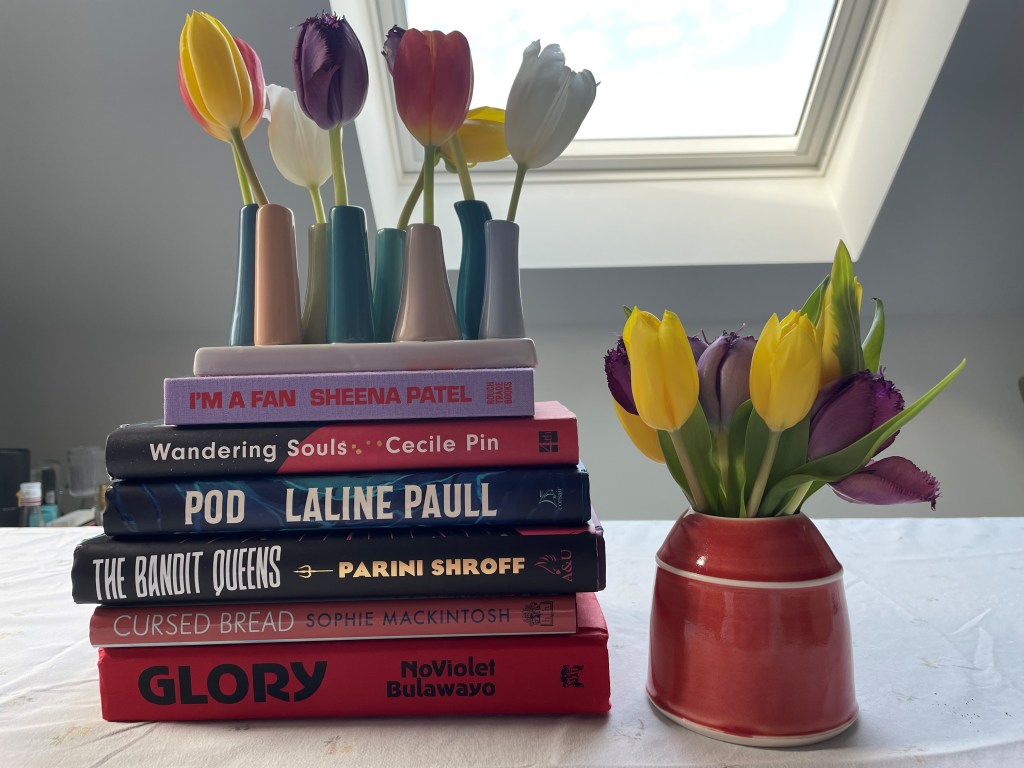
Over the last few years, I’ve made it my very pleasant mission to work through the annual Women’s Prize for Fiction longlist, cheering along when a favourite eventually makes the shortlist or reeling in outrage when another doesn’t. It’s a challenge – sixteen books in six weeks – but doing so has brought my attention to books and genres I wouldn’t have otherwise chosen to read. It’s affirmed firm favourites, such as 2021’s winner Piranesi, as well as bringing other books such as Miranda Cowley Heller’s haunting The Paper Palace (2022), Torrey Peter’s groundbreaking Detransition Baby (2021), and Ann Patchett’s absorbing The Dutch House into my life.
I managed 14 out of 16 this year. And blimey, was this a good selection or what?! So, as I make my way through the 2023 pile, indulge my chaotic thoughts.
t.w. sexual assault, domestic abuse, child abuse, lynching, violence, suicide, drugs.
other warning! spoilers ahead.
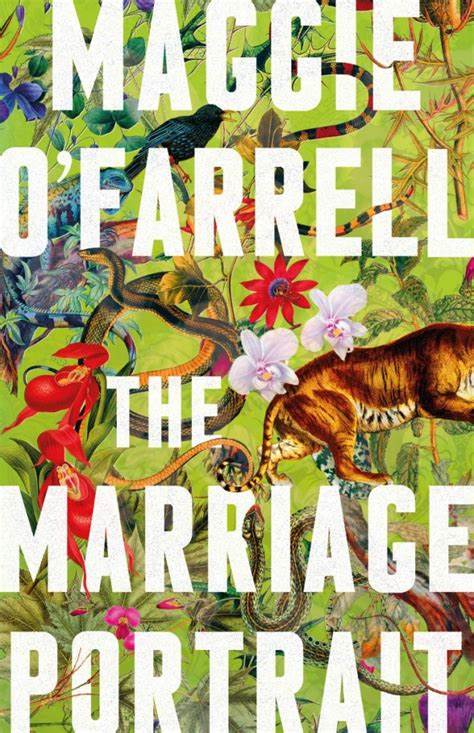
The Marriage Portrait, Maggie O’Farrell
I didn’t not enjoy The Marriage Portrait. Perhaps my apathy isn’t surprising given the fact that I enjoyed but didn’t love Hamnet, O’Farrell’s Women’s Prize-winning debut of 2021. Historical fiction not being my favourite genre aside, I found Lucrezia to be weak and unrelatable. Her stalwartness was annoying. Maybe this was the point and I was reaching for a feminist narrative, but I believe this is also the fault of the first half of the book. Where Lucrezia is early on set apart from her sisters, described as different, even firey, she later becomes a muse; a silent thief in the night. Of course, she marries at 13 and the cruelty of the powerful masculine forces around her forces her subservience. Altogether though, I think that the central objectification in the title — her portrait — didn’t quite land. Lucrezia as a character is inconsistent and not in a relatable way, but in that she seems like two different people entirely. For this reason, I think there should have been more focus on how she develops into someone capable of doing what she does at the end. To me, leaving her beloved maid to die unwittingly in her place seemed totally out of character and ended the tale in poor taste. Moreover, I didn’t think the portrait metaphor was developed as well as it could have been and her love affair with the silent artist was beside the point. Interesting in its evocation of Renaissance Italy, but overall not captivating. 2.5/5
Glory, NoViolet Bulawayo

I read Glory as a Booker Prize shortlister, but I’m so happy it’s on the Women’s Prize longlist too. I have never read a piece of fiction that tells stories of tragedy and genocide through metaphor and allegory so viscerally. This literary displacement forces the reader to see what the author is showing us so clearly: corruption, death, loss, torture, and cruelty, without allowing us the relief of remembering the characters aren’t real. The use of animal-in-place-of-human strikes hard and firm against the bleakness of the tale being told. Of course, the allegory format is not groundbreaking, based loosely on the form of Orwell’s Animal Farm. But the atrocities told are given even more power in the cognitive dissonance the allegory allows. A very powerful read. 4.5/5
i’m a fan, Sheena Patel
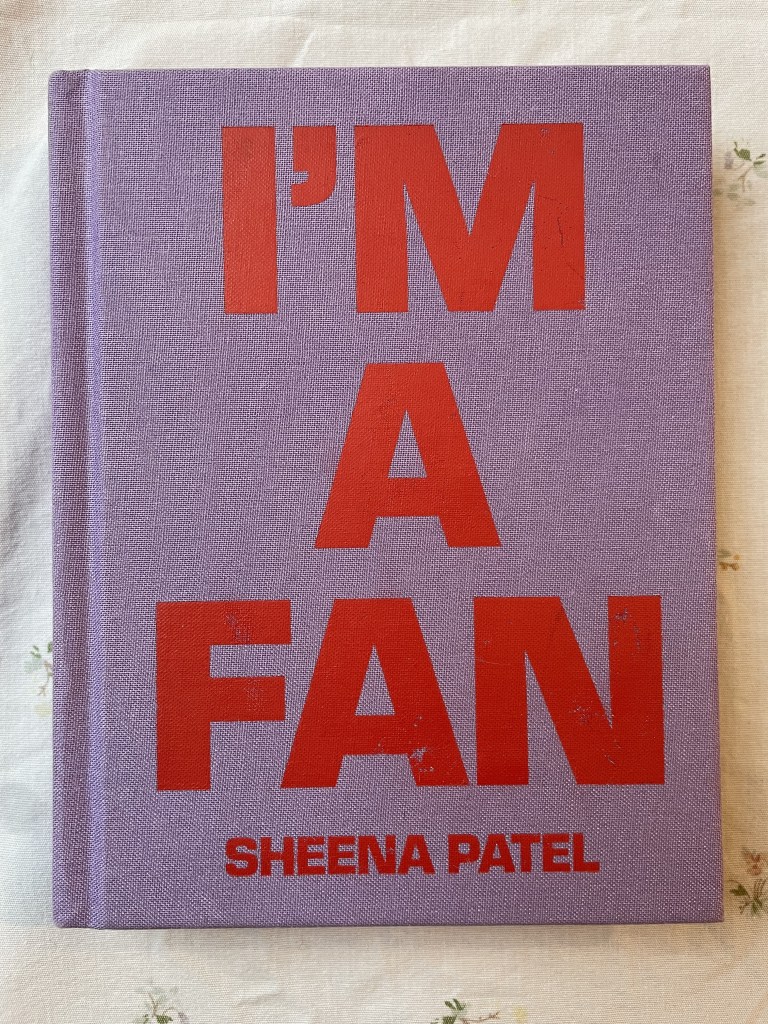
I loved the depiction of obsessive desire for someone who just doesn’t really care in this book. It’s a confronting look at modern dating and the uncomfortable hold that powerful, older men can have over young women despite our knowledge that it shouldn’t be so. It’s also a social critique on the wealth divide, on social media, on patriarchy, racism and conscious self-loathing. It does all of this while avoiding the overworked ‘messy girl in their 20s’ trope. Patel’s voice is unique and self-conscious. She manages to convey the anger experienced by the narrator in a way that links it directly to her inability to see a way out of the patriarchal, racist, classist society in which she lives. It’s a difficult read. Patel renders anger, humour, tenderness, sexuality, and desperation in a flatness evoked by her use of lowercase letters only. This style conveys the sense of outer forces taking control of personhood, of making the narrator passive, central to the reader’s uneasy sense of being part of the same system. 4/5
Stone Blind, Natalie Haynes
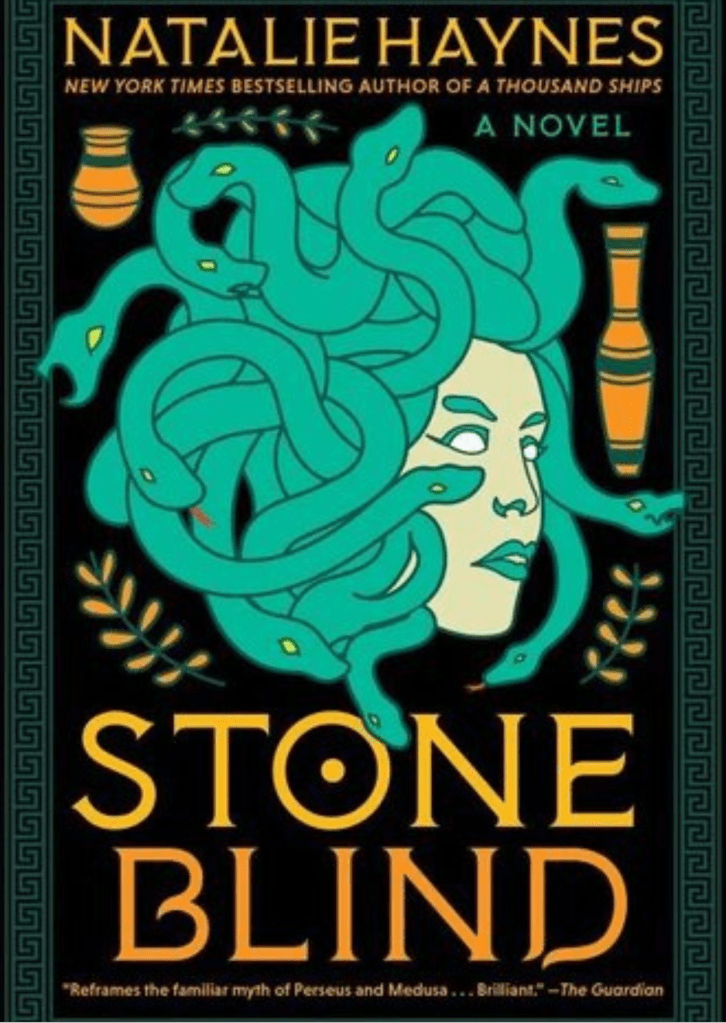
I love Natalie Haynes’ take on Greek mythology and it’s always enjoyable to see stories traditionally told from a male lens through that of a woman’s. Like always, the one-dimension myth with the ‘evil woman’ at the centre is unravelled to showcase a tale of male violence and suppression. Medusa is transformed into a monster who can turn men to stone after Poseidon rapes her in the Temple of Athene, angering the goddess. She is a peaceful spectator who, after being beheaded by the arrogant hero Perseus, is forced to perform acts of violence against his enemies (i.e. anyone who gets in his way). Haynes’ prose is sharp and witty, exposing misogynistic stereotypes and ridiculing the men exploiting power along the way. The chilling acts of violence, primarily against women, are balanced against a tale rich and full of colourful characters, all coalescing with Medusa at the centre. At times, the narrative decision to weave stories around Medusa-like a tapestry, without putting her at the forefront, didn’t quite work. A greater focus on Medusa and the Gorgons would have made her character and the story richer. Moreover, I didn’t need to hear more than I needed to from the unbearable Perseus. Despite this, Natalie Haynes is a master in witty dialogue that brings mythical figures to life, making for a thoroughly enjoyable read. 3.5/5
Children of Paradise, Camilla Grudova

“Spilled popcorn, contraband glass bottles of wine, champagne and beer that people snuck in, candy bar wrappings, banana peels, strangely heavy Pepsi cups which turned out to be filled with vomit or shit, sunglasses, umbrellas and, occasionally, toenails and semen, feathers even.“
Never have I read a novel so viscerally disgusting as The Children of Paradise. “Holly” begins working at an independent cinema, The Paradise, in an unspecified city for minimum wage as a way to make ends meet. Whilst there, she becomes part of the cult-like team of misfits who work there. But all of the characters in this book are shadows in comparison to the squalid Paradise cinema itself: the home of rats and mice, of various bodily discharges: of sewage, of rancid food and drugs and semen. Good taste is the central question as characters clean, shag, eat, defecate and even die whilst watching glamourous classic films. There is suicide and there is sex; the atmosphere is animalistic as the underpaid workers make a stand against the commercialisation of their cinema. Part ode to film and the people who love it; part critique of the capitalistic machine; part hallucinogenic, drug-fuelled frenzy, and part tragedy of Greecian proportion, this was an addictive read that I couldn’t put down, despite my revulsion. 4/5
Pod, Laline Paull

I’ve never read anything like Pod. This is a full and sweeping look at the lives of sea creatures — creatures we know little about and read about in fiction even less. Unlike Glory, this is no allegory. Although the behaviours of the dolphins, sharks, whales, and other fish share similarities to the way humans act on land, they are not representatives of it. Brutal animal behaviours exist alongside anthropomorphisms. They are fish at heart and this is a fascinating insight into the dangers of the ocean, into the underwater survival of the fittest pecking order, and into the destruction humans are wrecking on underwater habitats, making it impossible for fish life to exist and changing it forever. It’s about animal bonds and as the title suggests, the strength of the dolphin pod. It’s about each species of fish fighting for its own, about the power of many, and it’s about the beauty of the sea, despite its many dangers. There are moments of utter devastation. The rape of a dolphin mother and the consequent death of her calf had me weeping for days. And as this was by no means the last rape depicted, I think that this brutality became a little gratuitous to make for enjoyable reading. But at its best, the harshness is cut by the goodness of creatures at heart. Pod is brutal, it’s magical, it’s educational and its message is clear: protect these animals and protect our oceans or lose something magnificent. 4/5
Cursed Bread, Sophie Mackintosh

I realised at the end of Cursed Bread that I’d vaguely heard of the French village supposedly poisoned by their local boulangerie in the 1950s. Yet the ethereal prose with which the tale is told makes it such a tale seem impossible to believe, or else in poor taste. A story of prosaic, base cruelty is made poetic. But in other ways, such baseless, reasonless murder couldn’t be told in any other way. There’s no other reason proffered as explantation than madness, sex, desperation. The characters are vessels of desire. The main character idealises the new couple in town, the objects of her fantasies, to such an extent that we never see them as human and when they disappear, it’s as if they never existed at all, so baseless was their existence in the first place. And the projection doesn’t only come from the protagonist. They too, create a fantasy for her. They allow her to idealise them in order to play with her, to create entertainment. The cruelty is cutting. It gave me goosebumps. And it sets up an environment where it is so unnecessary, so fruitless, that a mass poisoning and the following self-mutilation, suicide and madness of the villagers could feasibly exist. Then again, it could all have been a dream too. We only know the aftermath; the retrospective. Where delusion still permeates. Overall it was a difficult read because every word involves you in the struggle. Blown away. Read it. 5/5
The Bandit Queens, Parini Shroff

Sometimes you need a book that is unapologetically about female rage. Set in an unspecified, small Indian village, the men and husbands in The Bandit Queens seem to have all of the control financially, physically, and socially. Meanwhile, microcosms of village women take out loans to create their own businesses and make their own money. A longstanding rumour that protagonist Geeta murdered her abusive husband triggers the start of a string of murders planned and carried out by other oppressed village wives. The premise is dramatic to the point of being unbelievable, but The Bandit Queens is not about murder. It is about a culture of which I know little, especially as many of the traditions and situations in which these women find themselves seem like they could be from 50 years ago. Many difficult topics are covered: domestic violence, coercive control, alcohol abuse, animal abuse, sexual assault, police corruption, misogyny, fatphobia, murder, extortion, religious rivalry, xenophobia, classism and child abuse. It is about how men are raised and not born to oppress. But overall this is a novel about women. It is about the damage women can do to each other, and it is about what they can achieve when they work together and support each other. It is about their loyalty. It is about the power women can yield. I loved it. 5/5
Wandering Souls, Cecile Pin

Ahn and her two younger brothers are Vietnamese siblings who find themselves orphaned after attempting to cross to Hong Kong in the aftermath of the withdrawal of the last American troops. Despite being of its time, their story is tragic in the familiarity of its intergenerational trauma. After the death of their parents and the dehumanizing experience of becoming asylum seekers, firstly in Hong Kong and then in the UK, the children have to set up new lives in a new culture determined not to welcome them. In light of increasingly draconian refugee laws in the UK, this is a pertinent read. As the eldest, Ahn takes on the role of caregiver to her brothers. She gives up her chance at education to create opportunities for them. But this is more than the sadly all-too-common refugee tale. The spirits of Ahn, Thanh and Minh’s ancestors and lost siblings accompany and watch over their journey. At times this seemed disjointed. Ahn’s voice is the main narrative strand, but the second and third are that of Dao, one of her deceased younger brothers, and her daughter writing an account in the future. This was a little difficult to keep up with, but it also gave a novel perspective that ensured the book wasn’t too much of a trope. The kindness of other refugees, asylum workers and strangers permeates. As each sibling adjusts to their new home over the years, their lives take on stories and interpretations of their own. The voices of generations of other refugees are loud. The call of Vietnam, of the place that gave the siblings food, language and home, and also the place that took their parents and forced them to flee, is strong and haunting. 4.5/5
Trespasses, Louise Kennedy

This is a tender story of passion and kindness in a time of violence and hate. Set in 1975 Belfast, 24-year-old Cushla is a Catholic school teacher by day and barmaid by night. She cares for her alcoholic mother and mourns her father at home. Everyone knows everyone’s business and religious bigotry is rife. This is a time of primary school children knowing terms such as “Booby trap. Incendiary device. Gelignite. Nitroglycerine. Petrol bomb. Rubber bullets…”. Amidst this, Cushla is seduced by Michael Agnew, a married Protestant barrister known for defending IRA members. At the same time, she befriends the mixed-religion family of school student Davy, whose father was recently brutally attacked. I said above that I’m not a fan of historical fiction, but this is an exception. There is nowhere else this novel could have been set. Despite her sometimes naive choices, we root for Cushla, but amongst such polarity, the decisions she makes are linked to everyone around her. You know from the beginning that this is not a happy story: the atrocities of this time are too recent for us to have forgotten and the chilling anti-protestant lectures of the school priest remind us of the rhetoric. The pull of personal and societal is perfectly defined by the short sentences and stark prose that describes the regular acts of violence whilst screaming with anger and frustration. But for all of its violence and hatred, Trespasses is about individuals trying to survive, and the kindnesses characters show each other. 4.5/5
Homesick, Jennifer Croft

There were two fantastic sides to Homesick, in my opinion. The first: language is a theme throughout both the life of the protagonist Amy and the book itself. The memoir was originally written in Spanish and crosses the boundary between the Russian and Ukrainian languages. It also explores the concept of image-as-fiction. The narrative is peppered with real photos from Croft’s childhood, bridging the boundary between narrative and reality; fiction and memoir. All of this would have made for an interesting read without the story itself. But what I loved about the narrative was the relationship between the two sisters, Amy and Zoe. Only someone with a sister could fully recognise the intensely competitive, fiercely protective and symbiotic relationship of two sisters separated by only a few years. How unbreakable that bond is. This is made especially strong because the youngest, Zoe, isn’t well and is in and out of treatment for a benign brain tumour throughout their shared childhood, impacting them both significantly. But rather than focusing on her sickness, the narrative is about the day-to-day life of growing up with a sister. Of the competitive dance routines made up in the living room. Of shared idols and crushes. Of the moments things start to change for the eldest in her teenage years, only for the youngest to catch up and be back in sync. Of the consistent draw and pull which has one sister moving forward whilst the other stands in the shadow of the other, only for this to change once again. This part is made even more moving because it’s a memoir, based on Croft’s relationship with her real sister. The book deals with difficult subjects such as rape, suicide and growing up too quickly, but it does this with taste and whilst ensuring that it’s still a completely relatable read, despite the twists and returns of Croft’s unique experience. 3.5/5
Fire Rush, Jacqueline Crooks
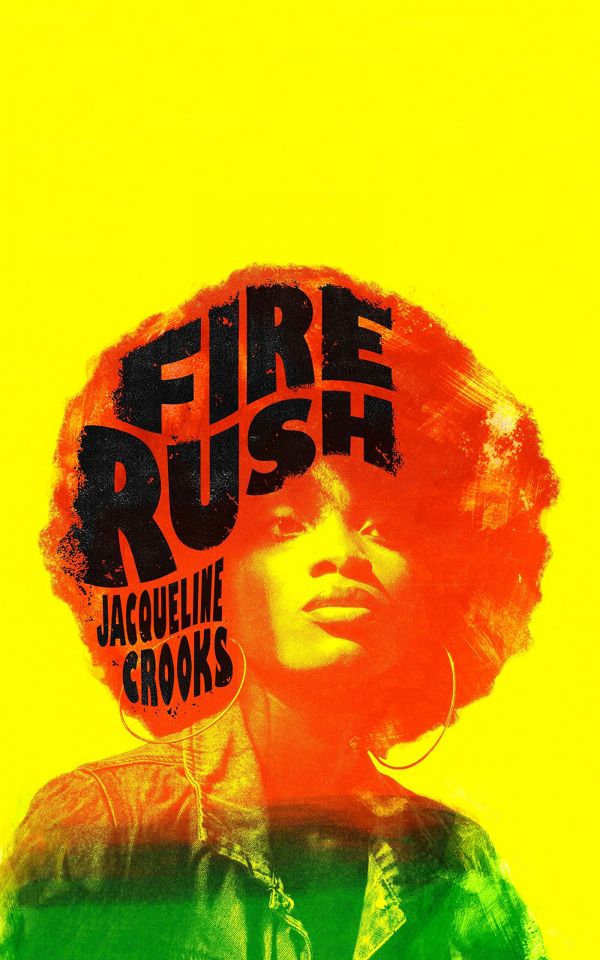
This is a book of epic proportions. Vibrating with music and power, it’s the story of Yamaye, a first-generation British Caribbean. Split into three parts, in the first Yamaye navigates racism and police brutality from within the underground dub scene of 1970s London, dancing her nights away with her friends in an abandoned crypt and hiding from ‘Babylon’. Falling in love and then losing it to a corrupt system. In the second part, we see the darker side of the system as Yamaye is swept into a life of crime, masculine rage and violence in the Bristol underworld. Finally, she travels to Cockpit Country, Jamaica in an attempt to find her lost mother and in the process, connect with herself. This is a must-read for any Brit who doesn’t know much about this side of our history and especially what it was like to be a Black woman at the time. Fire Rush is a love letter to London, to music, to sisterhood and to Jamaica. The prose is peppered with references to dance and music, as well as dialectic Jamaican patois. Dub is the connecting factor and alights the fire rush in Yamaye’s soul, as well as that of the people around her. To read it is to feel its power. 5/5
The Dog of the North, Elizabeth McKenzie
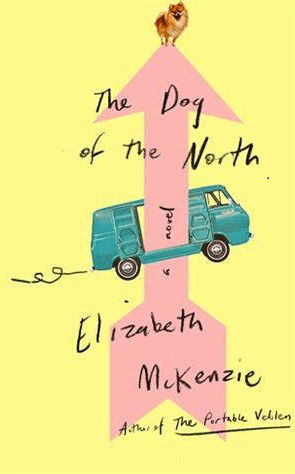
This is a very funny book. Highly eccentric but lovable characters place Penny in chaotic situations. When helping her Californian grandmother to move house, human remains are found in the woodshed. Said grandmother runs off with her accountant, who dies after eating too many spare ribs at a road stop café. The titular Dog of the North, a beaten-down old van pertinently bequeathed to Penny by the accountant, is a central character that facilitates the many road trips set upon to rescue various elderly characters peppered throughout. Quixote the dog, nicknamed Kweecoats (because no one can pronounce it the French way) shares a toupée with his owner. I struggled to understand some of the more obscure relationships that held together the plotline and the first-person narrative was frustratingly removed. However, the unpredictable and often comical situations in which Penny interacts with her family help her to find herself in chaos, making this a wholesome and witty read overall. 4/5
Memphis, Tara M Stringfellow
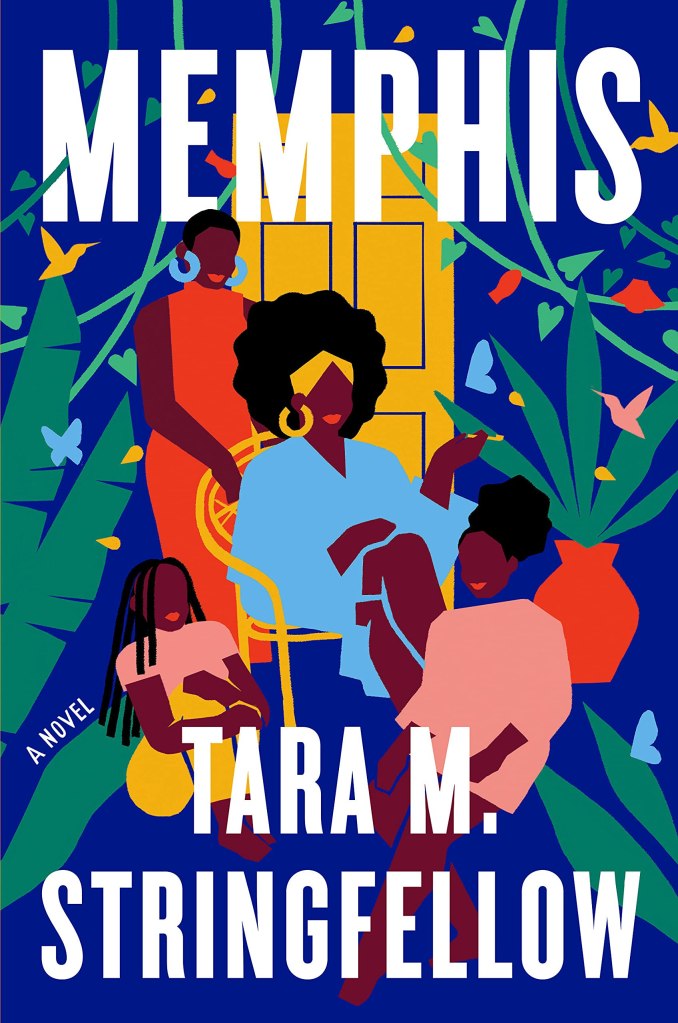
This is a dark novel that has moments of immense, quiet beauty. Tracing three generations of a Black Southern family and their legacy of trauma and triumph, the story follows ten-year-old Joan, her mother, and her younger sister as they flee her father’s violent temper and seek refuge in her mother’s ancestral home in Memphis. The novel spans seventy years and is narrated by a community of voices moving back and forth in time, painting a picture of the complexity of what we inherit and pass down as individuals and as a country. While the narrative is non-linear and moves within time, the writing is beautiful and character-driven. Again, difficult topics are covered, such as the rape of a child, domestic abuse, lynching and racism. Memphis is a character in itself too, full of music and the smell of the magnolia bloom, dramatically set against a backdrop of the city’s history of racism. Like so many of The Women’s Prize longlist, at its core is the relationships between the women and their struggle to survive and overcome. 4/5
Honourable mentions go to Black Butterflies, by Priscilla Morris and Demon Copperhead by Barbara Kingsolver. I will endeavour to read them even if neither makes the shortlist!
If you made it this far: thank you and I hope you enjoyed reading my jumbled thoughts! Until next time.
 hollyhamiltonwrites
One thought on “Women’s Prize for Fiction Longlist 2023: Review”